Thermal Conductivity in Injection Mold Design
Thermal conductivity is one of the primary factors governing the rate at which heat moves through a mold's core and cavity material during the cooling phase of injection …
AMPCO METAL
Articles tagged “”
Thermal conductivity is one of the primary factors governing the rate at which heat moves through a mold's core and cavity material during the cooling phase of injection …
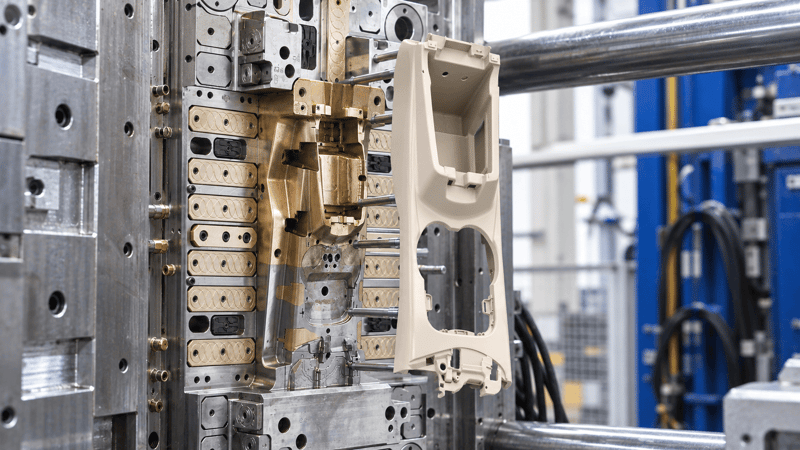
Heat transfer bottlenecks occur when the mold material cannot conduct heat away from the cavity as quickly as the process requires. This results in uneven cooling across …
Cycle time inefficiency is the gap between the cycle time a process should achieve and the cycle time it actually achieves. The gap is easy to measure, but its cause is n…
Consistently achieving high-quality plastic components demands effectively preventing common injection molding defects. Leveraging advanced mold materials such as the AMP…
Optimizing injection molding cycle times is crucial not just for maintaining efficiency, but also profitability. By leveraging the exceptional thermal properties of coppe…
Injection molding materials have evolved significantly, shaping industries with their versatility and efficiency. From early simple plastics to advanced composite materia…
Enhancing the performance of your injection molding machine leads to reduced defects, improved efficiency, and an overall better production quality. Our proven strategies…
Did you know that over 80% of the plastic products you use daily, like bottle caps, car parts, and mobile casings, are created using the same method? This crucial process…
Have you ever wondered how the right materials can dramatically extend the lifespan of your injection molds and slash maintenance costs? Discover the powerful role copper…
Did you know that the right material can transform your injection molding process? Discover how copper alloys do more than just enhance cooling – how do they revolutioniz…
Are you still using stainless steel for your injection molds and wondering if there's a better alternative? What if there was a material that could enhance your productio…
Copper recycling in injection molding significantly reduces energy consumption and emissions, making it a key driver of sustainable manufacturing. At AMPCO METAL, we prio…
In injection molding, whenever a plastic part has undercuts, the use of a slider is necessary. Otherwise, the plastic part cannot be ejected properly. For this to succeed…
When the intended shape of a molded part is distorted during the cooling phase of injection molding, it is called warpage. It is the most common error pattern when it com…
Copper-based alloys such as aluminum bronze and beryllium bronze are the premium solution for injection molding as they combine good strength, wear resistance, high-tempe…
Injection molding is manufacturers' preferred choice when it comes to mass production due to its simplicity and repeatability. But did you know that copper-based alloys a…
The right choice of tooling material can save you up to 40 % of your production costs. In our blogpost, you'll get to know why copper-based alloys are superior to convent…
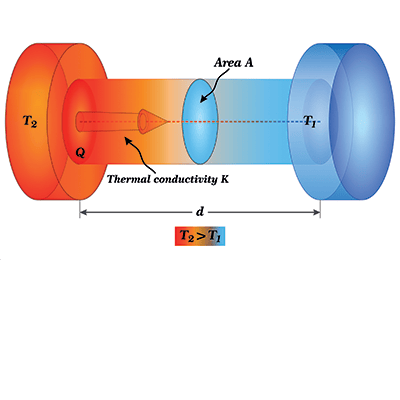
Copper is known for many properties: corrosion resistance, electric conductivity, antimicrobial, recyclable – and thermal conductivity. But what exactly is thermal conduc…
Our application engineers compare alloys on measurable properties — hardness, conductivity, yield strength — against your process conditions.