
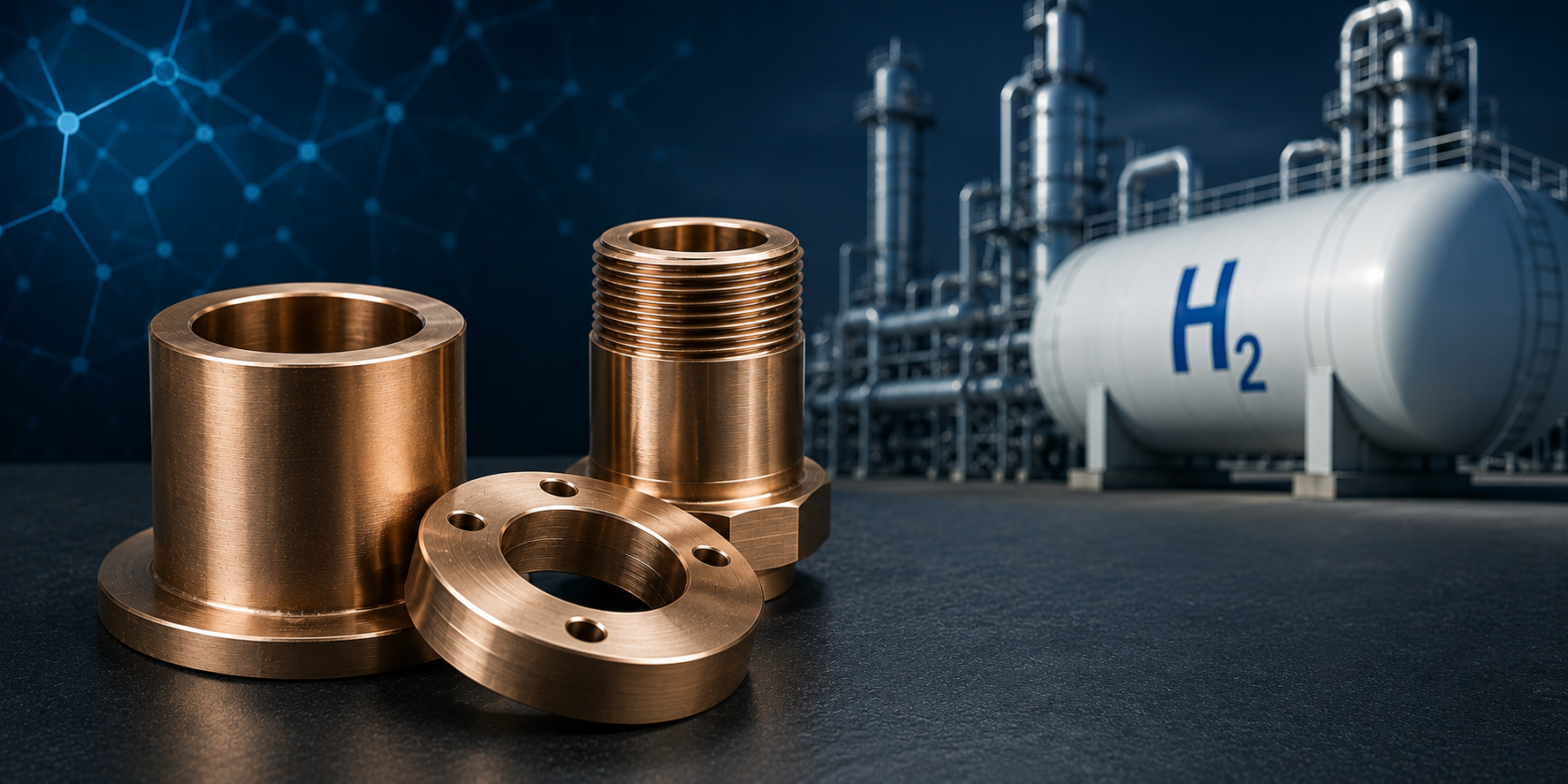
Hydrogen changes how engineers need to think about material selection. In conventional mechanical design, the first questions often concern strength, wear, corrosion resistance, machinability, and cost. In hydrogen applications, these questions remain important, but they must be assessed through another filter: how the material behaves when exposed to hydrogen under real operating and processing conditions.
This is especially relevant as hydrogen moves from established industrial use into broader infrastructure. Refineries, ammonia production, and chemical processing have used hydrogen for decades. Newer hydrogen applications in energy storage, refueling infrastructure, steel production, heavy transport, and industrial decarbonization expose components to demanding combinations of pressure, stress, temperature, and environmental conditions.
In this context, material selection becomes a risk-control decision. The selected alloy must support the required mechanical function while maintaining stability in the presence of hydrogen. A material that performs well in a conventional environment can behave differently when hydrogen is present, especially when the component is highly stressed, machined into a critical geometry, thermally processed, or exposed to pressure cycling.
One of the main risks is hydrogen embrittlement, and it occurs when hydrogen enters a metal and contributes to a loss of ductility, fracture resistance, or delayed cracking under stress. That is why material choice matters in hydrogen applications. The selected alloy must match the real exposure route, stress state, operating temperature, processing condition, and testing route of the final component.
Material Choice Starts
with the Hydrogen Exposure Route
Hydrogen exposure is often treated as a general condition, but engineers rarely design for “hydrogen” in the abstract. They design for a specific environment where hydrogen can contact, diffuse into, or interact with a material over time.
In gaseous hydrogen systems, exposure may occur under elevated pressure, during compression, storage, distribution, or refueling. In process equipment, hydrogen may be part of a gas mixture, may interact with moisture or contaminants, or may appear in environments where corrosion reactions generate atomic hydrogen at the material surface. While in manufacturing, hydrogen can enter a material through processes such as welding, casting, heat treatment, pickling, coating, or electrochemical cleaning.
The distinction matters because hydrogen uptake depends on the route of entry. Molecular hydrogen must dissociate into atomic hydrogen before it can enter a metal lattice. Surface condition, gas composition, pressure, temperature, and the presence of promoting or inhibiting species can all influence that process. A polished, machined, oxidized, coated, welded, or freshly exposed surface may, therefore, create different exposure conditions even when the base alloy is the same.
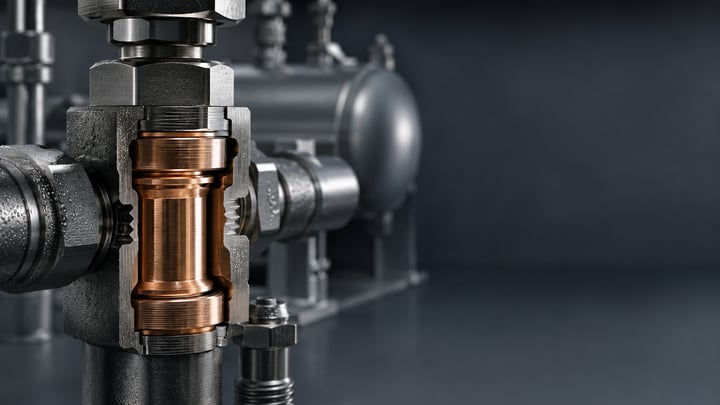
This is why material compatibility cannot be reduced to a generic “hydrogen-ready” label. The first engineering step is to define the exposure route as precisely as possible. A component in dry gaseous hydrogen at elevated pressure does not face the same risk profile as a part exposed to hydrogen generated by corrosion in an aqueous environment. Similarly, a material used in a compressor may require different evaluation from one used in a guide, bearing, valve seat, or fitting.
Stress State Defines
How Exposure Becomes Damage
Hydrogen-related degradation becomes critical when exposure combines with stress. The stress may come from one or more of the following:
- Operating loads
- Pressure differentials
- Contact stresses
- Assembly forces
- Residual stress from machining
- Local stress concentration around notches, threads, grooves, sharp radii, and inclusions
This point is central to material selection. Tensile strength alone does not define hydrogen compatibility. A material also needs sufficient ductility, fracture resistance, fatigue performance, and stability under the stress state of the final component. High-strength steels are a well-known concern in this regard because increasing strength and hardness can increase susceptibility to hydrogen-assisted cracking. For this reason, steel selection in hydrogen environments often requires careful limits on strength, hardness, microstructure, and surface condition.
The design challenge becomes more complex when a component has local stress raisers. A nominally acceptable material may still be vulnerable if the final geometry creates high local tensile stress. Threads, sealing areas, thin sections, press fits, and contact surfaces deserve attention because local stress can accelerate crack initiation and propagation.
This is one reason validated copper-based alloys are considered for selected hydrogen applications. They can provide combinations of mechanical strength, corrosion resistance, wear behavior, thermal conductivity, and lower susceptibility to hydrogen embrittlement under tested conditions, thus expanding the material selection window where steel selection may be constrained by hardness limits or strength-related embrittlement risk.
Temperature Changes the Failure Mechanism
Temperature is another major variable. Hydrogen embrittlement is generally associated with low or ambient temperature behavior, generally up to roughly 250°C. In this environment, diffusive hydrogen can interact with microstructural features and local stresses in ways that reduce ductility or promote cracking. At higher temperatures, hydrogen movement, trapping, effusion, and reaction mechanisms change. The dominant failure mode may also shift.
This means temperature should be treated as part of the material compatibility definition. A component exposed to hydrogen at ambient temperature during storage does not face the same material behavior as a part exposed during compression, thermal cycling, or elevated-temperature processing. Compressors, pumps, and other dynamic equipment can also generate heat during operation, making thermal management part of the design question.
For copper-based alloys, thermal conductivity can be an additional advantage. In hydrogen compressors and related equipment, heat removal can influence component size, stability, and service behavior. A material with higher thermal conductivity than many steels can support heat dissipation where the component design allows heat to move efficiently through the structure.
Temperature also affects testing. If hydrogen charging or operation occurs at elevated temperature, the test route must separate the effects of hydrogen from the effects of thermal exposure. Age-hardened alloys, heat-treated materials, and cold-worked conditions may respond to heat exposure independently of hydrogen. A valid test plan should therefore account for both hydrogen charging and thermal history.
Processing Condition Matters
as Much as Alloy Designation
Material choice is often discussed by alloy name, but hydrogen compatibility depends on the final material condition. The same alloy family can behave differently depending on the processing, from casting to forging, extrusion, rolling, heat treatment, cold work, welding, machining, surface finishing, and coating.
Processing changes microstructure. It can alter grain size, precipitate distribution, dislocation density, residual stress, hardness, surface condition, and defect population. These features influence hydrogen uptake, hydrogen trapping, crack initiation, and mechanical response. A material tested in one wrought condition cannot automatically represent every possible processed state.
This is especially important for semi-finished products that are later machined into final components. The base material may be validated under controlled conditions, but the final component can contain new surfaces, stress concentrations, local hardening, or residual stresses introduced by manufacturing. Heat treatment can improve strength, but it can also change the distribution of phases and precipitates. Machining can produce beneficial geometry and tight tolerances, but it can also introduce surface damage if process parameters are poorly controlled.
For hydrogen applications, engineers should, therefore, evaluate the final product state whenever possible. The relevant question is whether the component, after its actual manufacturing route, still meets the required resistance to hydrogen-related degradation.
Testing Must Follow the Actual Risk Route
Testing is where material selection becomes evidence-based. The most useful test route reflects the conditions that matter for the application: hydrogen exposure, stress state, temperature, duration, pressure, surface condition, and final material condition.
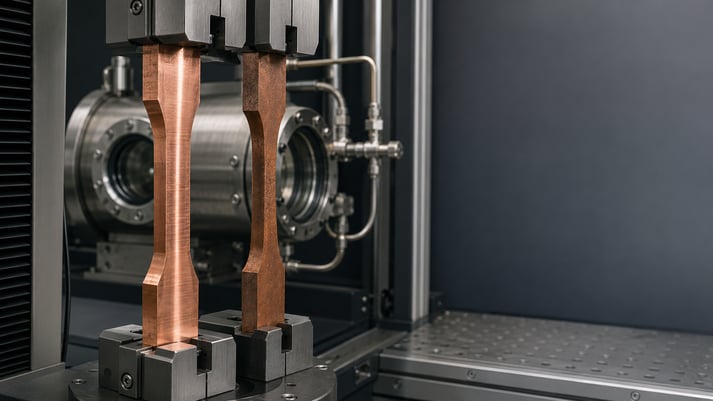
Slow strain rate testing is commonly used to evaluate susceptibility to hydrogen embrittlement because it exposes the material to tensile deformation under conditions that can reveal ductility loss, fracture changes, or hydrogen-assisted cracking. Hydrogen charging before or during testing can help assess whether hydrogen exposure changes mechanical performance. Thermal desorption analysis can provide information about hydrogen content after charging and after mechanical testing.
AMPCO METAL has focused on two copper-based alloys that address different engineering requirements in hydrogen-bearing environments:
- AMPCO® 18 is a high-strength aluminum bronze used in demanding industrial applications where strength, wear resistance, corrosion resistance, toughness, and a beryllium-free composition are important.
- AMPCOLOY® 83 is a high-strength beryllium copper alloy intended for applications that require very high mechanical strength, hardness, and good thermal and electrical conductivity.
Together, the two alloys provide different material options for engineers evaluating hydrogen compatibility at different strength levels. AMPCO METAL has tested AMPCO® 18 and AMPCOLOY® 83 at the DECHEMA Institute in Frankfurt. The samples were charged with hydrogen according to DIN EN ISO 17081 and subsequently tested using the SSRT method. Neither material exhibited signs of hydrogen embrittlement under the tested conditions.
Yet, testing still needs to be interpreted correctly. Controlled material testing provides a strong basis for selection, but final component validation remains necessary. Hydrogen compatibility depends on the actual geometry, processing route, surface condition, loading mode, and operating environment. A validated alloy helps reduce uncertainty, but it does not eliminate the responsibility to qualify the final component.
Material Choice is an Engineering Control
Hydrogen infrastructure depends on materials that can perform reliably under conditions where conventional assumptions may be insufficient. The risk is rarely tied to hydrogen exposure alone but emerges from the combination of hydrogen, stress, temperature, microstructure, processing, and time.
This is why material choice matters. It defines the starting point for mechanical reliability, environmental compatibility, manufacturability, and validation. In hydrogen applications, a suitable material must be selected with the final operating and processing route in mind.
AMPCO® 18 and AMPCOLOY® 83 give engineers tested copper-based alloy options for hydrogen-exposed environments. Their performance at DECHEMA, together with their mechanical and physical properties, makes them relevant candidates where hydrogen compatibility must be assessed alongside strength, corrosion behavior, wear resistance, and thermal performance.
The safest material decision is the one supported by application-specific testing. For hydrogen systems, that means evaluating the material in the condition that matters most: the final component state, exposed to the relevant hydrogen environment, under the stress and temperature conditions it will actually face.
For hydrogen-bearing components where material choice must be validated against real service conditions, AMPCO METAL can support engineers with tested data on AMPCO® 18 and AMPCOLOY® 83. Contact AMPCO METAL’s technical team to discuss the conditions and requirements for your application.
