
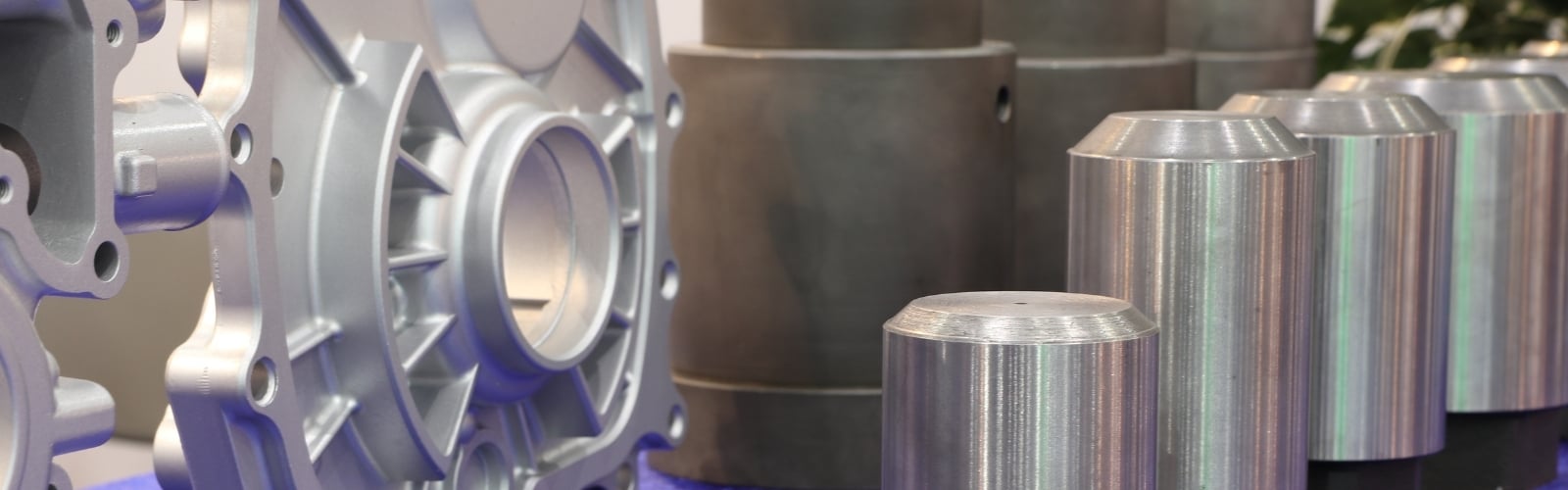
How does high pressure die casting work? Molten metal is injected into a steel die at high pressure, quickly filling the cavity and solidifying into a precise shape. The result is fast, repeatable production of complex parts.
A Fast Casting Process Built on Pressure
High pressure die casting is one of the fastest ways to produce metal parts at scale, especially when you need consistent dimensions and clean, repeatable detail from shot to shot. If you’ve ever wondered how does high pressure die casting work the simplest answer is the following one: molten metal is injected into a hardened steel die at very high speed and under pressure, where it solidifies into the final shape within seconds.
At the center of the high pressure die casting process is the die and the die casting machine, which controls injection, and the total casting-cycle. The melt is typically delivered into a shot sleeve, then pushed forward by a piston. At the end of filling, systems apply intensification pressure to pack the metal as it solidifies, helping maintain dimensional accuracy and reduce variability.
The HPDC Cycle in Simple Steps
In high pressure die casting, the cycle is essentially a tightly controlled sequence of dosing, die-filling, pressure intensification, and solidification inside a closed steel die. The die casting machine coordinates clamp force, piston movement, injection, and timing, so the process can repeat within a narrow window.
- Die closing and clamping
The die halves close and lock under high clamping force to prevent parting-line separation during the steps of die filling and solidification. - Metal dosing into the shot sleeve
A metered dose of molten metal is introduced into the shot sleeve. In many cases the shot sleeve is thermally regulated to limit the deformation of the shot sleeve as much as possible. - Injection, typically carried out in two phases
A plunger (piston) drives the melt through the shot sleeve and gating system:
- Slow shot (pre-fill): advances the metal with lower velocity to control wave formation, limit air entrapment, and position the metal at/near the gate.
- Fast shot (fill): transitions to high velocity to fill the cavity with molten metal.
- Packing via intensification pressure
After the cavity is filled, the post-process phase starts and high-pressure is applied to reduce porosity and stabilize dimensions during solidification. This is where the process shifts from “filling” to “solidification.” - Solidification, opening the die, and ejection
The casting solidifies in the die under controlled heat extraction. The die opens, ejector pins push the part out, and the operator or a robot removes the part, and the cycle resets. Biscuits and overflows are removed in trimming operations.
Key technical levers to observe for HPDC:
- Shot sleeve fill ratio and dosing repeatability (consistency shot-to-shot)
- Piston speed in the first phase (to avoid turbulence and the risk of trapping air)
- Piston speed in the second phase (controlled die filling)
- Pressure in post-pressure phase (helps to reduce porosity and dimensional control)
- Natural or vacuum-venting (reduced porosity, increased casting quality)
.jpg?width=1200&height=800&name=Blog%20images%201200x800%20(11).jpg)
High-pressure die casting machine
What “High Pressure” Changes
In HPDC, pressure is a process variable that, during the third phase of the casting cycle, has an influence on the porosity or micro-porosity of the cast and how the casting “locks in” dimensions during solidification. Once the melt accelerates through the gate, the speed of the piston in the second phase and the design of the injection gate drives the filling of the cavity.
Pressure becomes important immediately after filling. As the casting starts to solidify, the process typically shifts into a pre-pressure phase where high pressure is applied. This sustained load helps compensate for solidification shrinkage in the still-molten regions and improves repeatability when the pressure remains effective long enough. A higher speed of the piston in the second phase and a high pressure in the pre-pressure phase helps to remove porosity.
Where Results Are Made or Lost
In practice, the performance of HPDC is decided in the short window between shot sleeve filling and the end of pre-pressure phase. Small shifts in that window can show up immediately as porosity, bad casting quality, or shortened die life.
One make-or-break area is how the die fills. Gate design and the velocity at the gate drive the die-filling, which directly affects the casting quality by capturing air or causing porosity. An efficient solution is to install venting blocks into the mold frame. These can be designed for natural venting or vacuum venting. Another few practical “loss points” to watch closely are:
- Air management: venting or vacuum-venting effectiveness, plus leak paths at the parting lines and sliders
- Shot- consistency: dosing into the shot sleeve, fill ratio, and timing stability from shot to shot
- Type of piston and gap between piston and shot-sleeve: these influence the time of breakthrough, life of the piston and the shot-sleeve
.jpg?width=1200&height=800&name=Blog%20images%201200x800%20(12).jpg)
Finished die casting part
Final Thoughts
If you step back and look at how does high pressure die casting works, you observe it’s a repeatable sequence of controlled dosing, high-velocity cavity filling, the pre-pressure phase, and rapid heat extraction inside a hardened steel die. The high pressure die casting process rewards stability. Consistent metal delivery through the shot sleeve, predictable heat dissipation from the injection gate and biscuit, and well-managed air evacuation all do more for quality than chasing small changes on the die casting machine.
Even in a general overview, one point is worth keeping in mind: materials and component design around the shot-sleeve, e.g. the used piston, can influence heat dissipation via the piston and wear on the shot-sleeve. This is where suppliers like AMPCO come into the conversation, especially for high-wear, heat-dissipation to offer the possibility to reduce cycle-time and save cost. If you would like to know more, you can keep on reading via our ACADEMY.
