---
title: What Is Wear and What Are the Different Types of Wear?
description: Wear affects industrial components through abrasive, adhesive, and fatigue mechanisms that reduce performance and service life over time.
image: https://academy.ampcometal.com/hubfs/Banner%20background%20image-Dec-18-2025-10-03-19-5440-AM.jpg
---
[](https://academy.ampcometal.com/)
- Products
- AMPCO® Aluminium Bronze
- [AMPCO® 8](https://www.ampcometal.com/products/ampco-aluminum-bronze/ampco-8/)
- [AMPCO® 15](https://www.ampcometal.com/products/ampco-aluminum-bronze/ampco-15/)
- [AMPCO® 18](https://www.ampcometal.com/products/ampco-aluminum-bronze/ampco-18/)
- [AMPCO® 18.136](https://www.ampcometal.com/products/ampco-aluminum-bronze/ampco-18-136/)
- [AMPCO® 18.22](https://www.ampcometal.com/products/ampco-aluminum-bronze/ampco-18-22//)
- [AMPCO® 18.23](https://www.ampcometal.com/products/ampco-aluminum-bronze/ampco-18-23/)
- [AMPCO® 21](https://www.ampcometal.com/products/ampco-aluminum-bronze/ampco-21/)
- [AMPCO® 22](https://www.ampcometal.com/products/ampco-aluminum-bronze/ampco-22/)
- [AMPCO® 25](https://www.ampcometal.com/products/ampco-aluminum-bronze/ampco-25/)
- [AMPCO® 26](https://www.ampcometal.com/products/ampco-aluminum-bronze/ampco-26/)
- [AMPCO® 45](https://www.ampcometal.com/products/ampco-aluminum-bronze/ampco-45/)
- [AMPCO® M4](https://www.ampcometal.com/products/ampco-aluminum-bronze/ampco-m4/)
- AMPCOLOY® High Copper Alloy
- [AMPCOLOY® 83](https://www.ampcometal.com/products/ampcoloy-high-copper-alloy/ampcoloy-83/)
- [AMPCOLOY® 88](https://www.ampcometal.com/products/ampcoloy-high-copper-alloy/ampcoloy-88/)
- [AMPCOLOY® 89](https://www.ampcometal.com/products/ampcoloy-high-copper-alloy/ampcoloy-89/)
- [AMPCOLOY® 91](https://www.ampcometal.com/products/ampcoloy-high-copper-alloy/ampcoloy-91/)
- [AMPCOLOY® 95](https://www.ampcometal.com/products/ampcoloy-high-copper-alloy/ampcoloy-95/)
- [AMPCOLOY® 940](https://www.ampcometal.com/products/ampcoloy-high-copper-alloy/ampcoloy-940/)
- [AMPCOLOY® 944](https://www.ampcometal.com/products/ampcoloy-high-copper-alloy/ampcoloy-944/)
- [AMPCOLOY® 972](https://www.ampcometal.com/products/ampcoloy-high-copper-alloy/ampcoloy-972/)
- [Cu-W Sintered](https://www.ampcometal.com/products/ampcoloy-high-copper-alloy/cu-w-sintered)
- AMS Alloys
- [AMS 4590](https://www.ampcometal.com/products/ams-alloys/ams-4590/)
- [AMS 4640](https://www.ampcometal.com/products/ams-alloys/ams-4640/)
- [AMS 4880](https://www.ampcometal.com/products/ams-alloys/ams-4880/)
- [AMS 4881](https://www.ampcometal.com/products/ams-alloys/ams-4881/)
- [Standard Alloys](https://www.ampcometal.com/products/standard-alloys/)
- [Welding Wire](https://www.ampcowelding.com/)
- [Safety Tools](https://www.safetytools.com/)
- Solutions
- Applications
- [Wear Resistance](https://www.ampcometal.com/applications/wear-resistance/)
- [Corrosion Resistance](https://www.ampcometal.com/applications/corrosion-resistance/)
- [Metal Forming & Tooling](https://www.ampcometal.com/applications/metal-forming/)
- [Die Casting](https://www.ampcometal.com/applications/die-casting/)
- [Plastic Processing](https://www.ampcometal.com/applications/plastic-processing/)
- [Resistance Welding](https://www.ampcometal.com/applications/resistance-welding/)
- Industries
- [Aerospace](https://www.ampcometal.com/industries/aerospace/)
- [Automotive](https://www.ampcometal.com/industries/automotive/)
- [General Engineering](https://www.ampcometal.com/industries/general-engineering/)
- [Marine](https://www.ampcometal.com/industries/marine/)
- [Metal Forming](https://www.ampcometal.com/industries/metal-forming/)
- [Oil, Gas & Chemical](https://www.ampcometal.com/industries/oil-gas-chemical/)
- [Plastic Processing](https://www.ampcometal.com/industries/plastic-processing/)
- [Resistance Welding](https://www.ampcometal.com/industries/resistance-welding/)
- [Steel](https://www.ampcometal.com/industries/steel)
- [Hydrogen](https://www.ampcometal.com/industries/hydrogen)
- [Luxury](https://www.ampcometal.com/industries/luxury)
- [Finished Machine Parts](https://www.ampcometal.com/finished-machined-parts/)
- [Additive Manufacturing](https://www.ampcometal.com/additive-manufacturing/)
- [Technical Consulting](https://www.ampcometal.com/technical-consulting/)
- Who We Are
- [Sustainability](https://www.ampcometal.com/sustainability/)
- [Sustainability Management](https://www.ampcometal.com/sustainability/sustainability-management/)
- [Environment](https://www.ampcometal.com/sustainability/environment/)
- [Social](https://www.ampcometal.com/sustainability/social/)
- [Governance](https://www.ampcometal.com/sustainability/governance/)
- [Future Goals](https://www.ampcometal.com/sustainability/furure-goals/)
- [Our History](https://www.ampcometal.com/our-history/)
- [About Us](https://www.ampcometal.com/about-us/)
- [Working at AMPCO](https://www.ampcometal.com/working-at-ampco)
- [Working with AMPCO](https://www.ampcometal.com/working-with-ampco)
- Technical Hub
- Technical Data
- [Application Datasheets](https://www.ampcometal.com/application-datasheets/)
- [Technical Datasheets](https://www.ampcometal.com/technical-datasheets/)
- [Microcast® Technology](https://www.ampcometal.com/mirocast-technology/)
- [Machining Recommendations](https://www.ampcometal.com/machining-recommendations/)
- Documentation
- [Safety Data Sheets](https://www.ampcometal.com/safety-data-sheets/)
- [Certifications](https://www.ampcometal.com/certifications/)
- [Food Approval Data](https://www.ampcometal.com/food-approval-data/)
- [Sales Terms and Conditions](https://www.ampcometal.com/sales-terms-and-conditions/)
- [ATEX Certification Data](https://www.ampcometal.com/atex-certification-data/)
- [Product Selection Tool](https://www.ampcometal.com/product-selection-tool/)
- [Stock Availability](https://www.ampcometal.com/ssd/)
- [Academy](https://academy.ampcometal.com/)
- [Contact](https://www.ampcometal.com/contact-us/#contact-us)
# What Is Wear and What Are the Different Types of Wear?
Dec 18, 2025 12:49:01 PM | Written by [AMPCO METAL](https://academy.ampcometal.com/author/ampco-metal)
- [Tweet](https://twitter.com/share)
**Every moving part experiences wear over time. In manufacturing, this gradual material loss affects performance, efficiency, and lifespan. Understanding what wear is and how it occurs is essential to prevent costly damage and downtime.**
### Understanding Wear
Wear is the gradual removal or deformation of material from a surface due to mechanical action. It occurs whenever two surfaces slide, roll, or press against each other. In industrial environments, wear is one of the leading causes of reduced efficiency and component failure. Although it cannot be completely avoided, it can be controlled and minimized through proper design, material selection, and maintenance practices.
In manufacturing, understanding wear is fundamental to improving reliability and reducing unplanned downtime. By studying how materials respond to stress, contact, and motion, engineers can design components that last longer and perform more consistently. Knowing the mechanisms behind wear allows industries to choose materials and alloys that better withstand the conditions of each application.
### Causes of Wear
Wear occurs due to the combined effects of friction, pressure, and motion between contacting surfaces. When two materials move against each other, microscopic high points, called asperities, collide and break away, leading to gradual material loss.
Several key factors accelerate this process:
- **Friction and load:** Excessive contact pressure or poor lubrication increases surface stress.
- **Temperature:** High operating temperatures can soften materials and reduce their resistance to wear.
- **Surface roughness:** Uneven or poorly finished surfaces generate more friction and heat.
- **Corrosion and oxidation:** Chemical reactions weaken material bonds and make surfaces more vulnerable.
- **Contaminants:** Dust, debris, or particles trapped between surfaces act as abrasives.
The intensity of wear depends on the interaction of these factors and the material properties involved.
-jpg-1.jpeg?width=1080&height=1350&name=New%20Instagram%201080x1350%20(5)-jpg-1.jpeg)*All parts are susceptible to wear*
### Types of Wear
Different mechanisms cause wear depending on the type of contact and operating environment. In most industrial settings, five main types of wear are observed:
- **Abrasive wear:** Caused when hard particles or rough surfaces slide across softer materials, removing small fragments from the surface.
- **Adhesive wear:** Occurs when two surfaces bond at contact points and tear apart during movement, leading to material transfer or galling.
- **Corrosive wear:** Results from chemical reactions between the surface and its environment, such as oxidation or exposure to aggressive substances.
- **Fatigue wear:** Develops under repeated stress cycles, causing surface cracking, flaking, or spalling.
- **Erosive wear:** Happens when fast-moving fluids or solid particles strike a surface and gradually remove material.
Each type affects components differently, depending on material properties, surface conditions, and operating environments.
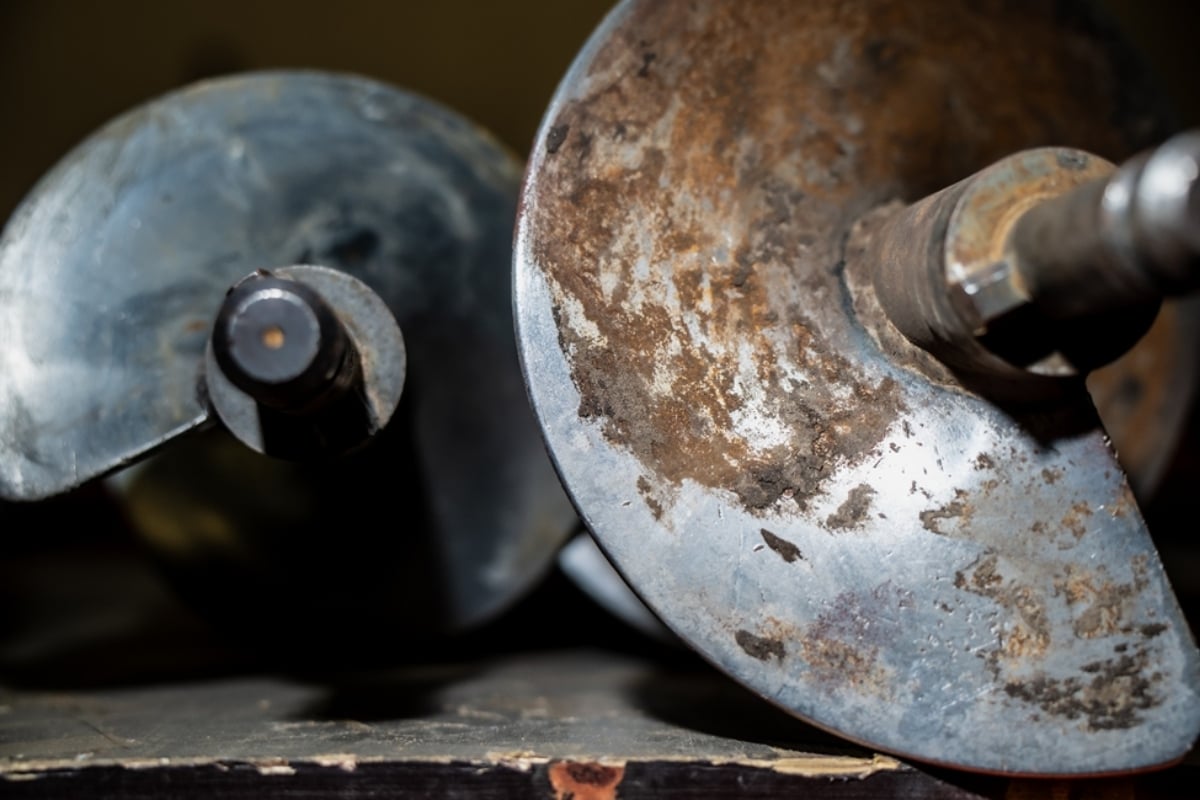
*Mechanical auger showing signs of different types of wear*
### Why It Matters to Identify Wear Types
Identifying the specific wear mechanism is essential to understanding how materials behave under stress and contact. Each form of wear has distinct patterns on the surface, such as grooves, transfer layers, pitting, or erosion marks. These patterns provide valuable clues about the dominant forces acting on a component, whether abrasive particles, adhesion between metals, or repeated cyclic loads.
Accurate diagnosis allows for targeted countermeasures instead of generalized maintenance. Abrasive wear, for instance, may require the use of harder alloys or improved filtration systems to eliminate particles. Adhesive wear can be reduced through low-friction coatings or dissimilar material pairings that prevent galling. Corrosive wear calls for alloys with higher chemical stability, while fatigue wear often points to the need for optimized geometry or better surface treatments.
Recognizing these distinctions helps engineers and maintenance teams make data-driven decisions regarding material selection, surface engineering, and lubrication design. The result is improved operational reliability, fewer unexpected failures, and longer component lifespan.
### Final Thoughts
Wear is a natural consequence of friction and contact between materials, but its effects can be managed with knowledge and careful design. Understanding what wear is, what causes it, and how it manifests helps identify weaknesses before they lead to failure. Each type of wear reveals something about the conditions and stresses within a system, offering insights that guide better material and maintenance choices.
In the next article, we will look beyond the technical side to explore the real economic impact of [wear in manufacturing](https://www.ampcometal.com/applications/wear-resistance/) and how it affects productivity and overall operational costs. If you wish to explore this topic and other relevant aspects for industrial use, you can visit the [AMPCO Academy](https://academy.ampcometal.com/?hsLang=en) and explore its many source materials.
---
[](https://cta-redirect.hubspot.com/cta/redirect/5331421/8da01823-dd9b-42be-91b8-c4efd4d4c1ea)
-
-
-
-
- [Terms of use](https://www.ampcometal.com/terms-of-use/)
- [Privacy](https://www.ampcometal.com/privacy/)
- [Links](https://www.ampcometal.com/links/)
- [Sitemap](https://www.ampcometal.com/sitemap/)
- [Code of ethics and conduct](https://www.ampcometal.com/documents/CODE-of-ETHICS-and-CONDUCT.pdf)
© 2026 AMPCO METAL