---
title: "Understanding Surface Wear: How AMPCO Provides Solutions"
description: Surface wear reduces precision and service life, requiring engineered materials like AMPCO alloys to maintain stability under load and friction.
image: https://academy.ampcometal.com/hubfs/Wear%20resistance.jpg
---
[](https://academy.ampcometal.com/)
- Products
- AMPCO® Aluminium Bronze
- [AMPCO® 8](https://www.ampcometal.com/products/ampco-aluminum-bronze/ampco-8/)
- [AMPCO® 15](https://www.ampcometal.com/products/ampco-aluminum-bronze/ampco-15/)
- [AMPCO® 18](https://www.ampcometal.com/products/ampco-aluminum-bronze/ampco-18/)
- [AMPCO® 18.136](https://www.ampcometal.com/products/ampco-aluminum-bronze/ampco-18-136/)
- [AMPCO® 18.22](https://www.ampcometal.com/products/ampco-aluminum-bronze/ampco-18-22//)
- [AMPCO® 18.23](https://www.ampcometal.com/products/ampco-aluminum-bronze/ampco-18-23/)
- [AMPCO® 21](https://www.ampcometal.com/products/ampco-aluminum-bronze/ampco-21/)
- [AMPCO® 22](https://www.ampcometal.com/products/ampco-aluminum-bronze/ampco-22/)
- [AMPCO® 25](https://www.ampcometal.com/products/ampco-aluminum-bronze/ampco-25/)
- [AMPCO® 26](https://www.ampcometal.com/products/ampco-aluminum-bronze/ampco-26/)
- [AMPCO® 45](https://www.ampcometal.com/products/ampco-aluminum-bronze/ampco-45/)
- [AMPCO® M4](https://www.ampcometal.com/products/ampco-aluminum-bronze/ampco-m4/)
- AMPCOLOY® High Copper Alloy
- [AMPCOLOY® 83](https://www.ampcometal.com/products/ampcoloy-high-copper-alloy/ampcoloy-83/)
- [AMPCOLOY® 88](https://www.ampcometal.com/products/ampcoloy-high-copper-alloy/ampcoloy-88/)
- [AMPCOLOY® 89](https://www.ampcometal.com/products/ampcoloy-high-copper-alloy/ampcoloy-89/)
- [AMPCOLOY® 91](https://www.ampcometal.com/products/ampcoloy-high-copper-alloy/ampcoloy-91/)
- [AMPCOLOY® 95](https://www.ampcometal.com/products/ampcoloy-high-copper-alloy/ampcoloy-95/)
- [AMPCOLOY® 940](https://www.ampcometal.com/products/ampcoloy-high-copper-alloy/ampcoloy-940/)
- [AMPCOLOY® 944](https://www.ampcometal.com/products/ampcoloy-high-copper-alloy/ampcoloy-944/)
- [AMPCOLOY® 972](https://www.ampcometal.com/products/ampcoloy-high-copper-alloy/ampcoloy-972/)
- [Cu-W Sintered](https://www.ampcometal.com/products/ampcoloy-high-copper-alloy/cu-w-sintered)
- AMS Alloys
- [AMS 4590](https://www.ampcometal.com/products/ams-alloys/ams-4590/)
- [AMS 4640](https://www.ampcometal.com/products/ams-alloys/ams-4640/)
- [AMS 4880](https://www.ampcometal.com/products/ams-alloys/ams-4880/)
- [AMS 4881](https://www.ampcometal.com/products/ams-alloys/ams-4881/)
- [Standard Alloys](https://www.ampcometal.com/products/standard-alloys/)
- [Welding Wire](https://www.ampcowelding.com/)
- [Safety Tools](https://www.safetytools.com/)
- Solutions
- Applications
- [Wear Resistance](https://www.ampcometal.com/applications/wear-resistance/)
- [Corrosion Resistance](https://www.ampcometal.com/applications/corrosion-resistance/)
- [Metal Forming & Tooling](https://www.ampcometal.com/applications/metal-forming/)
- [Die Casting](https://www.ampcometal.com/applications/die-casting/)
- [Plastic Processing](https://www.ampcometal.com/applications/plastic-processing/)
- [Resistance Welding](https://www.ampcometal.com/applications/resistance-welding/)
- Industries
- [Aerospace](https://www.ampcometal.com/industries/aerospace/)
- [Automotive](https://www.ampcometal.com/industries/automotive/)
- [General Engineering](https://www.ampcometal.com/industries/general-engineering/)
- [Marine](https://www.ampcometal.com/industries/marine/)
- [Metal Forming](https://www.ampcometal.com/industries/metal-forming/)
- [Oil, Gas & Chemical](https://www.ampcometal.com/industries/oil-gas-chemical/)
- [Plastic Processing](https://www.ampcometal.com/industries/plastic-processing/)
- [Resistance Welding](https://www.ampcometal.com/industries/resistance-welding/)
- [Steel](https://www.ampcometal.com/industries/steel)
- [Hydrogen](https://www.ampcometal.com/industries/hydrogen)
- [Luxury](https://www.ampcometal.com/industries/luxury)
- [Finished Machine Parts](https://www.ampcometal.com/finished-machined-parts/)
- [Additive Manufacturing](https://www.ampcometal.com/additive-manufacturing/)
- [Technical Consulting](https://www.ampcometal.com/technical-consulting/)
- Who We Are
- [Sustainability](https://www.ampcometal.com/sustainability/)
- [Sustainability Management](https://www.ampcometal.com/sustainability/sustainability-management/)
- [Environment](https://www.ampcometal.com/sustainability/environment/)
- [Social](https://www.ampcometal.com/sustainability/social/)
- [Governance](https://www.ampcometal.com/sustainability/governance/)
- [Future Goals](https://www.ampcometal.com/sustainability/furure-goals/)
- [Our History](https://www.ampcometal.com/our-history/)
- [About Us](https://www.ampcometal.com/about-us/)
- [Working at AMPCO](https://www.ampcometal.com/working-at-ampco)
- [Working with AMPCO](https://www.ampcometal.com/working-with-ampco)
- Technical Hub
- Technical Data
- [Application Datasheets](https://www.ampcometal.com/application-datasheets/)
- [Technical Datasheets](https://www.ampcometal.com/technical-datasheets/)
- [Microcast® Technology](https://www.ampcometal.com/mirocast-technology/)
- [Machining Recommendations](https://www.ampcometal.com/machining-recommendations/)
- Documentation
- [Safety Data Sheets](https://www.ampcometal.com/safety-data-sheets/)
- [Certifications](https://www.ampcometal.com/certifications/)
- [Food Approval Data](https://www.ampcometal.com/food-approval-data/)
- [Sales Terms and Conditions](https://www.ampcometal.com/sales-terms-and-conditions/)
- [ATEX Certification Data](https://www.ampcometal.com/atex-certification-data/)
- [Product Selection Tool](https://www.ampcometal.com/product-selection-tool/)
- [Stock Availability](https://www.ampcometal.com/ssd/)
- [Academy](https://academy.ampcometal.com/)
- [Contact](https://www.ampcometal.com/contact-us/#contact-us)
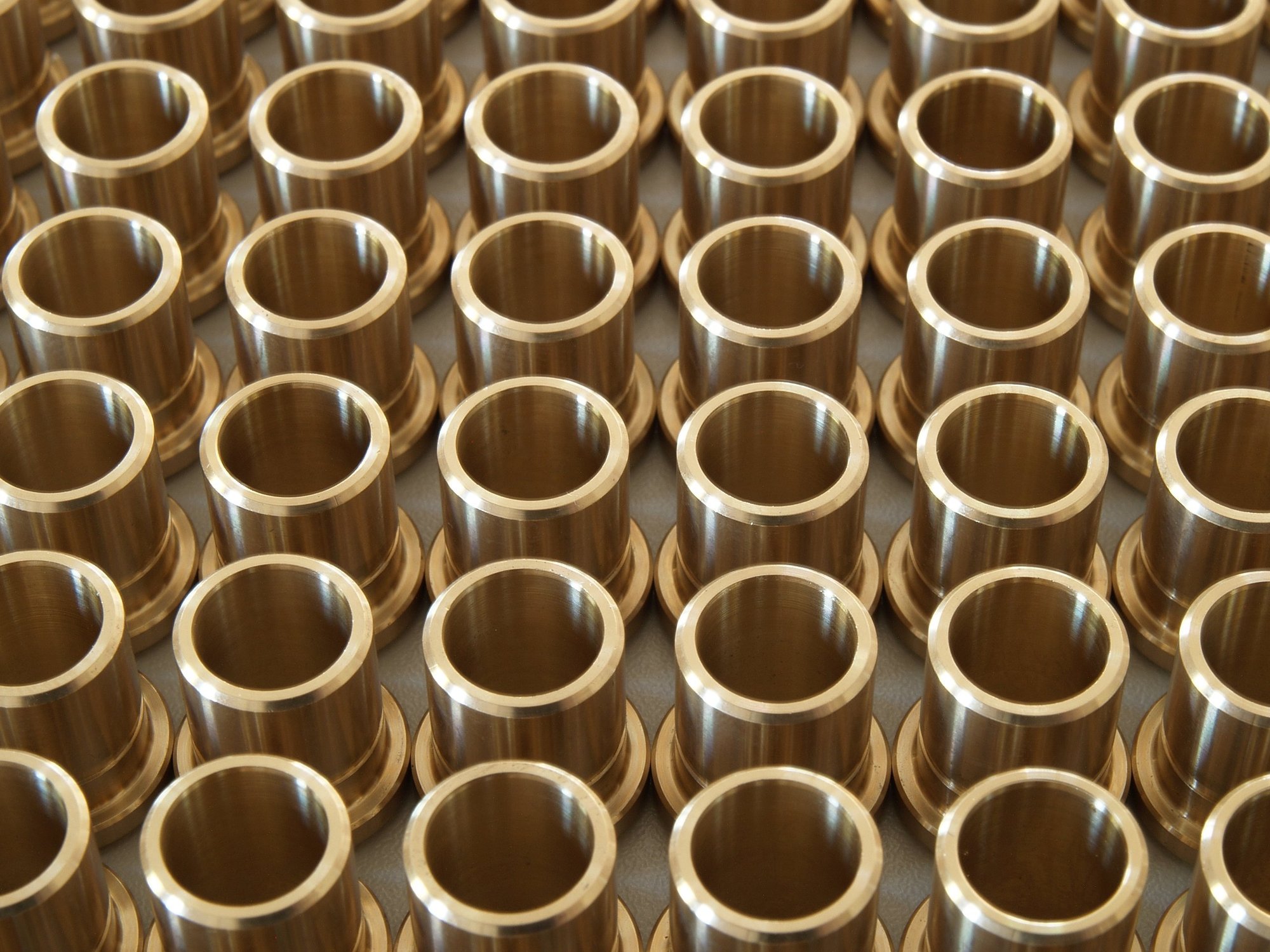
# Understanding Surface Wear: How AMPCO Provides Solutions
Dec 19, 2025 5:20:06 PM | Written by [AMPCO METAL](https://academy.ampcometal.com/author/ampco-metal)
- [Tweet](https://twitter.com/share)
**Surface wear is a progressive form of material degradation caused by friction, sliding contact, and repetitive stress. In industrial operations, it alters surface geometry, increases roughness, and reduces dimensional accuracy, factors that directly impact process stability and tool life.**
### The Challenge of Surface Wear in Industry
Surface wear affects nearly every mechanical system that relies on sliding or rolling contact. In manufacturing, it is a primary reason for dimensional loss, reduced component lifespan, and unplanned maintenance. Even small surface changes caused by abrasion or galling can alter load distribution and lead to premature tool replacement.
As production speeds and contact pressures increase, conventional materials often reach their wear limits faster. Repeated friction and metal-to-metal contact cause local welding, surface scoring, and material transfer. These effects not only degrade product quality but also disrupt entire production cycles. Managing surface wear is therefore critical for maintaining consistent performance, minimizing downtime, and reducing overall production costs.
[If you are looking for more in-depth information, you can download our latest detailed technical paper: Improving Wear Resistance with High-Performance Copper Alloys](https://academy.ampcometal.com/landing-page-wear-resistance-2025?hsLang=en)
### Common Causes and Effects of Surface Wear
Surface wear arises from mechanical, thermal, and chemical interactions between contacting surfaces. The most frequent causes include high friction, excessive load, insufficient lubrication, and abrasive particles in the working environment. Over time, these factors generate surface fatigue, deformation, and micro-cracking that compromise tool performance.
The main mechanisms behind surface wear are:
- **Abrasive wear:** Hard particles or rough surfaces cut into softer materials, removing microscopic fragments.
- **Adhesive wear:** Localized welding between surfaces during sliding, followed by tearing when motion continues.
- **Corrosive wear:** Surface deterioration accelerated by oxidation or chemical reactions under frictional heat.
- **Fatigue wear:** Repeated stress cycles that cause surface cracking or delamination.
The effects of these mechanisms are cumulative. Dimensional accuracy declines, surface finish deteriorates, and heat buildup increases friction even further. This cycle of degradation eventually leads to component failure and unplanned production interruptions.
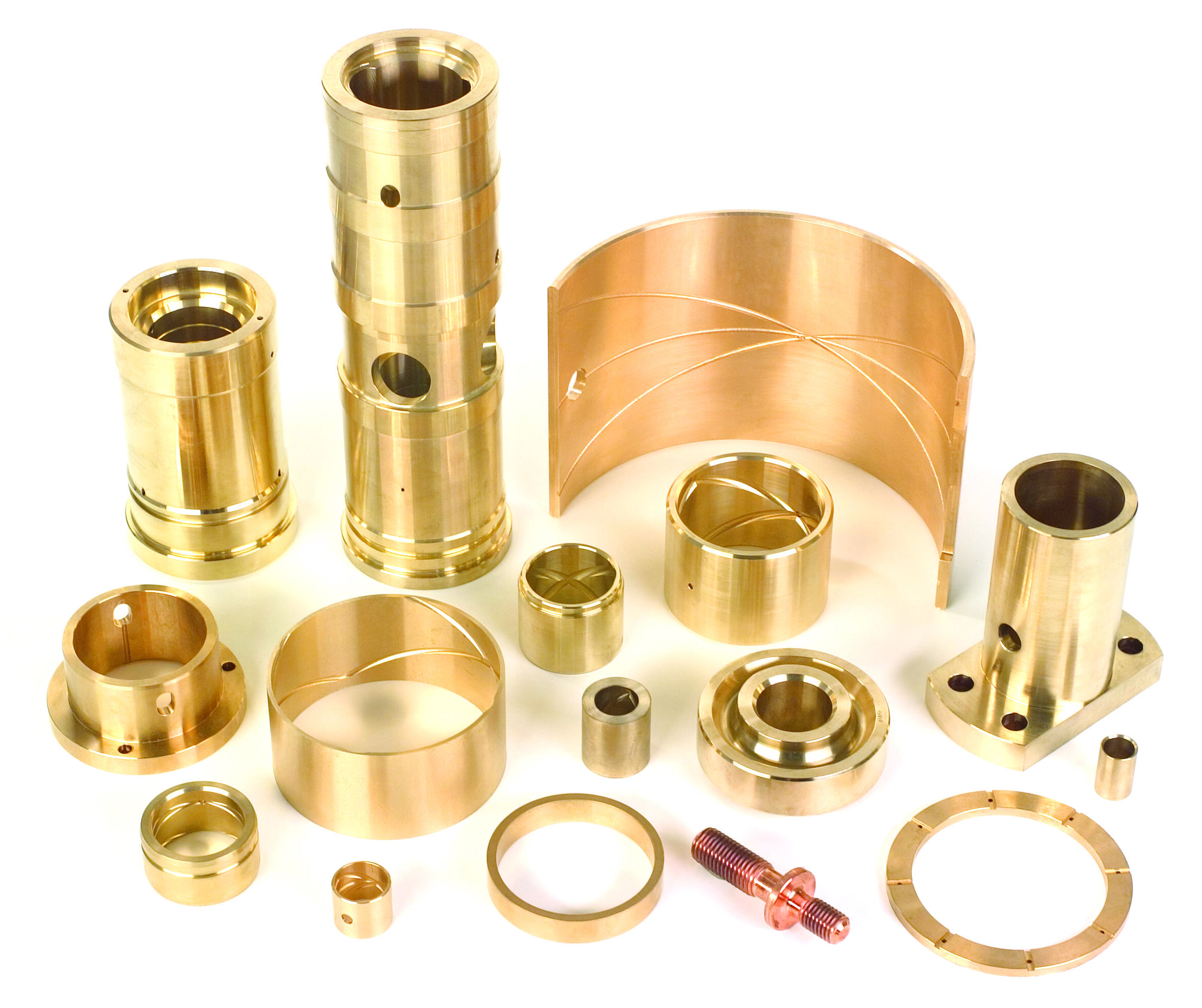*A selection of wear parts from AMPCO METAL*
### Why Conventional Materials Fall Short
Traditional tool steels and standard bronzes are widely used in wear-critical components, yet their performance is limited under modern production demands. Tool steels offer high hardness, but are prone to galling and surface adhesion when in contact with stainless or coated materials. This leads to scoring, micro-welding, and increased friction, especially under limited lubrication.
Standard bronzes, on the other hand, provide better sliding characteristics but lack the hardness and strength needed to resist abrasive wear and deformation under heavy load. Over time, they lose dimensional stability, requiring more frequent polishing or replacement.
In high-speed or high-pressure applications, these limitations translate into shorter tool life and unpredictable wear behavior. The result is greater maintenance frequency, reduced productivity, and higher cost per part. For these reasons, manufacturers are increasingly adopting advanced copper-based alloys engineered to deliver superior [wear resistance](https://www.ampcometal.com/applications/wear-resistance/) and stable performance in demanding conditions.
-1.jpg?width=1200&height=800&name=Blog%20images%201200x800%20(6)-1.jpg)
*Graphite inserts in sliding parts lubricate and reduce surface wear*
### How AMPCO Alloys Improve Surface Wear Resistance
AMPCO alloys are engineered to address the wear challenges that conventional materials cannot withstand. Their performance is defined by a unique combination of hardness, ductility, and structural stability that minimizes friction and surface damage under demanding conditions.
- [**AMPCO® 45**](https://www.ampcometal.com/products/ampco-aluminium-bronze/ampco-45/) provides a balanced mix of hardness and toughness, offering reliable sliding behavior under continuous load. Its uniform grain structure maintains consistent wear patterns, while its resistance to galling makes it ideal for bushings, wear plates, and guides in forming and rolling operations.
- [**AMPCO® M4**](https://www.ampcometal.com/products/ampco-aluminium-bronze/ampco-m4/) delivers superior hardness and strength, with tensile strength reaching up to 1000 MPa and Brinell hardness values between 260 and 300 HBW. It resists both abrasive and adhesive wear, ensuring long-term dimensional stability in heavily loaded components such as bearings and clamping elements.
- [**AMPCOLOY® 83**](https://www.ampcometal.com/products/ampcoloy-high-copper-alloy/ampcoloy-83/) combines extreme hardness (up to 360 HBW) with high tensile strength and excellent polishability. This alloy performs exceptionally well in tooling, resistance welding, and plastic molding applications where both wear resistance and surface quality are essential.
Compared to steels and standard bronzes, AMPCO alloys exhibit smoother sliding characteristics, reduced material transfer, and longer service intervals. Their ability to retain hardness and structural integrity under high contact stress makes them a proven solution for extending tool life and maintaining consistent surface quality in wear-intensive environments.
### Final Thoughts
Surface wear remains one of the most persistent challenges in industrial production, directly affecting tool life, product quality, and operational efficiency. While conventional materials reach their limits under high load and temperature, AMPCO alloys deliver the hardness, strength, and stability required for long-term performance. Their proven resistance to galling, abrasion, and deformation ensures consistent operation and reduced maintenance across a wide range of applications.
For engineers and technicians seeking in-depth knowledge on wear mechanisms and material performance, visit the [**AMPCO Academy**](https://academy.ampcometal.com/?hsLang=en) to explore technical articles, data, and industry-focused resources.
To learn more about how AMPCO alloys improve wear resistance in practical applications, download our detailed technical paper *“Improving Wear Resistance with High-Performance Copper Alloys.”*
*[](https://academy.ampcometal.com/landing-page-wear-resistance-2025?hsLang=en)*
*[](https://academy.ampcometal.com/hs/cta/wi/redirect?encryptedPayload=AVxigLIY93HOCLNkiLJ%2Fq2jzZRObE5ENOsfva8jtTK36K4Y8g6br8qN5djiZlbNEvlluHqlFLs0H%2BZJRix8XoTtqbDr8AXOCebEwiREWuwuOH0Nf2Bn3UCPzwmkpb2aodNnVnX0xG0t6T4VRrCSUMvEPBbky7B%2FGU1o0vKjqbF0MSGbgC9xlrVjZ8e0APeN1pJAvKBJ9MlUBzdxmrH7mAMWT8N0Rp1k%3D&webInteractiveContentId=199253833889&portalId=5331421&hsLang=en)*
---
[](https://cta-redirect.hubspot.com/cta/redirect/5331421/8da01823-dd9b-42be-91b8-c4efd4d4c1ea)
-
-
-
-
- [Terms of use](https://www.ampcometal.com/terms-of-use/)
- [Privacy](https://www.ampcometal.com/privacy/)
- [Links](https://www.ampcometal.com/links/)
- [Sitemap](https://www.ampcometal.com/sitemap/)
- [Code of ethics and conduct](https://www.ampcometal.com/documents/CODE-of-ETHICS-and-CONDUCT.pdf)
© 2026 AMPCO METAL