
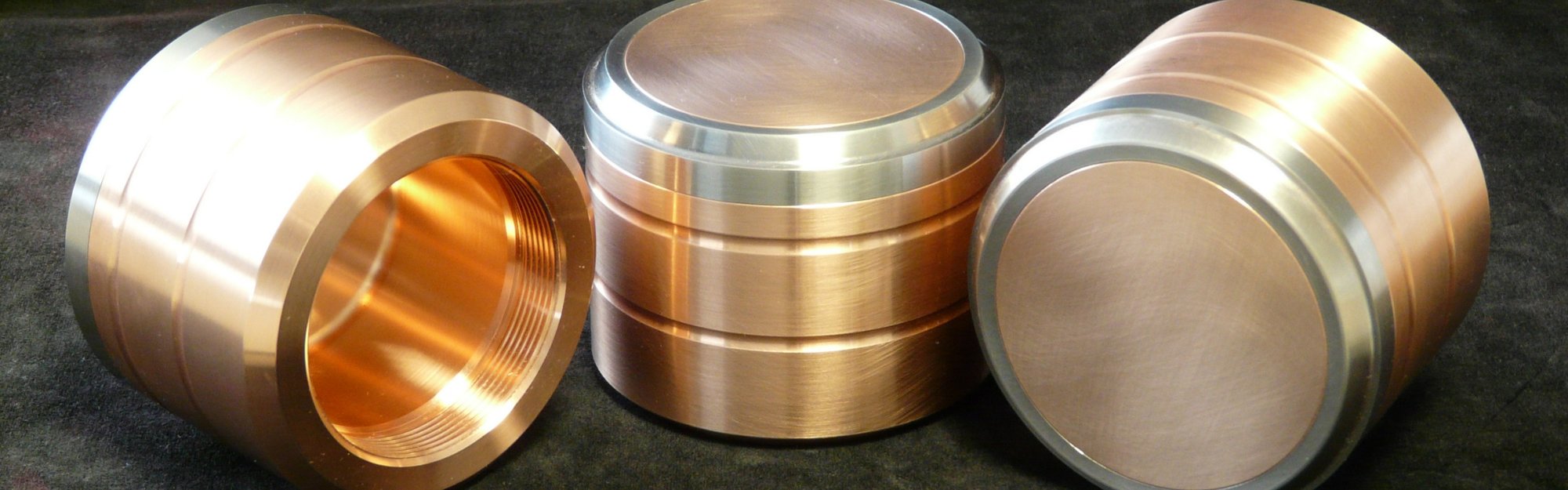
In the die casting process, the fastest gains usually come from improving repeatability at the shot end and air evacuation, not from pushing machine settings harder. High-performance copper alloys help by removing heat where it accumulates and supporting stable and efficient venting behavior.
Why the Die Casting Process Behaves Like a Repeatability Problem
On paper, high pressure die casting looks like a controlled sequence of speed, pressure, and timing. In practice, however, it is actually a highly complex process involving many different influencing factors. Heat dissipation through the die-casting piston, piston service life, or insufficient venting of the die can gradually narrow the operating window and lead to increased downtime or more frequent maintenance.
That’s why “improving the process” often comes down to removing the limiting factor that prevents continuous production. In HPDC, these limitations can generally be divided into a few practical categories: thermal stress that is not dissipated quickly enough; wear that alters the interaction between the piston and the shot sleeve over time; limitations in air extraction; and operational constraints that turn routine maintenance into downtime.
The point of using high-performance copper alloys is not to swap materials everywhere. It’s to use them where they change the stability of the system in measurable ways, especially in shot-end components and die-integrated venting hardware, and to tie the selection back to checkable inputs like cooling capability, vent cross-section, connecting channel geometry, and serviceability.
To alleviate many problems with selecting the proper solutions for HPDC, we have created the following:
Material Selection Guide for High Pressure Die Casting Components
Making the Shot Repeatable Rather Than Chasing Speed
In die casting, it is essential that the quality criteria for the casting are met with every single shot. This repeatability is generally determined by the processes that occur during the casting cycle: how evenly heat is dissipated from the die residue and the gate, how stably the piston operates under load, and whether the piston clearance remains within a tight tolerance range even during long production runs. When heat accumulates, components drift toward higher operating temperatures, which can show up as sticking or even piston jamming, followed by interruptions and higher maintenance.
The practical lesson is that “speed” should come after casting quality and repeatability, but the two are not mutually exclusive. A stable shot-end setup helps you avoid compensating with conservative settings that while ensuring quality, drive up cycle time. Based on the selection logic, the limiting factors can usually be easily classified and verified:
- Thermal constraint: heat must be removed fast enough from the biscuit and at the injection gate to prepare for the next shot.
- Mechanical constraint: geometry must remain stable under repeated loading, often by keeping the load path defined rather than letting high-conductivity parts carry structural loads.
- Wear constraint: changes in contact behavior of the piston in the shot sleeve and creating a bigger clearance can escalate into excessive gaps and shot-through risk.
This is also why high-performance copper alloys tend to be used selectively at the shot end: not as a blanket material change, but where heat extraction and contact stability set the stability limit of the process.
.jpg?width=1200&height=800&name=Blog%20images%201200x800%20(17).jpg)
Air Evacuation as a System Function and Not a Feature
In the die casting process, venting only looks simple until you connect it to the real constraint: you have a very short window to evacuate gas before metal flows in, and the system must also function reliably over long production runs. For this reason, the selection process treats venting management as a problem comprising several components, from the overflows and the vent channel to the vent insert. Performance is generally limited and determined just as much by the connection of the overflows and the channel cross-section as by the vent cross-section in the vent insert itself.
A practical way to think about it is the following:
- Natural venting performance is geometry-driven. The vent cross-section needs to be calculated, but the dominant factor is typically the gap height in the venting block, not the width. The guide even notes that doubling the height can quadruple venting performance, which is exactly why “tiny channels” are rarely a real fix.
- Vacuum venting raises the bar for everything around it. Once you rely on vacuum, leakage anywhere in the tool or around piston systems reduces performance, so vacuum venting has to be treated as a system requirement, not a single component upgrade.
- Venting hardware has two jobs, not one. It must provide gas passage, but it also has to stop metal through fast freeze-off to avoid shot-through. That dual function is why high thermal conductivity materials are used in chill blocks and why “more vent area” only helps if the design still freezes metal reliably.
- Protect the entry condition. The guide calls out a non-negotiable rule: reduce metal velocity shortly before the venting block. Excessive velocity increases shot-through risk and raises maintenance requirements.
Using Copper Alloys Where They Remove Process Limits
The point of using high-performance copper alloys in the die casting process is not to “upgrade the whole die.” It’s to target the zones where the process is being limited by a real constraint you can name, measure, and validate. The selection guide frames this plainly: AMPCOLOY is valuable when you use a high-conductivity copper alloy where heat extraction governs performance while still meeting mechanical loading and service requirements.
In practice, two areas show up again and again:
- Shot-end components (piston head and piston-adapter systems): The guide recommends treating the piston as an architecture decision, with a defined load path (steel adapter) and a hot-zone element (copper-alloy head) so the high-conductivity part is not forced to behave like a structural member.
- Die-integrated air management (venting blocks / chill blocks): Venting hardware has to evacuate gas and also stop metal by fast freeze-off, which is exactly why high thermal conductivity materials are used in these inserts.
A useful rule of thumb is as follows: without a heat dissipation path, there is no benefit. Cooling is a mandatory requirement, and performance is linked to the cooling capacity within the piston-adapter-piston rod system. If this requirement is met, copper alloys can boost the system’s stability limit, and only then do improvements in cycle time and maintenance intervals become realistic rather than merely theoretical.
Final Thoughts
Improving the die casting process usually comes down to tightening what you can actually control: repeatable shot-end behavior and reliable air evacuation. The selection mindset in our guide is also intentionally practical: identify the dominant limiter (thermal, mechanical, wear, air evacuation, or maintenance), translate it into checkable inputs, and then select components and alloys that match those constraints instead of relying on trial-and-error tuning.
That is also why you should download our technical paper. It functions as a shortlisting tool that connects real production constraints to verifiable selection inputs like cooling flow capability, vent cross-section and channel geometry, and protected vent entry conditions.