---
title: How Wear Resistant Alloys Enhance Equipment Lifespan
description: Wear resistant alloys help extend equipment lifespan by maintaining surface integrity, dimensional stability, and performance under continuous load.
image: https://academy.ampcometal.com/hubfs/12-1.jpg
---
[](https://academy.ampcometal.com/)
- Products
- AMPCO® Aluminium Bronze
- [AMPCO® 8](https://www.ampcometal.com/products/ampco-aluminum-bronze/ampco-8/)
- [AMPCO® 15](https://www.ampcometal.com/products/ampco-aluminum-bronze/ampco-15/)
- [AMPCO® 18](https://www.ampcometal.com/products/ampco-aluminum-bronze/ampco-18/)
- [AMPCO® 18.136](https://www.ampcometal.com/products/ampco-aluminum-bronze/ampco-18-136/)
- [AMPCO® 18.22](https://www.ampcometal.com/products/ampco-aluminum-bronze/ampco-18-22//)
- [AMPCO® 18.23](https://www.ampcometal.com/products/ampco-aluminum-bronze/ampco-18-23/)
- [AMPCO® 21](https://www.ampcometal.com/products/ampco-aluminum-bronze/ampco-21/)
- [AMPCO® 22](https://www.ampcometal.com/products/ampco-aluminum-bronze/ampco-22/)
- [AMPCO® 25](https://www.ampcometal.com/products/ampco-aluminum-bronze/ampco-25/)
- [AMPCO® 26](https://www.ampcometal.com/products/ampco-aluminum-bronze/ampco-26/)
- [AMPCO® 45](https://www.ampcometal.com/products/ampco-aluminum-bronze/ampco-45/)
- [AMPCO® M4](https://www.ampcometal.com/products/ampco-aluminum-bronze/ampco-m4/)
- AMPCOLOY® High Copper Alloy
- [AMPCOLOY® 83](https://www.ampcometal.com/products/ampcoloy-high-copper-alloy/ampcoloy-83/)
- [AMPCOLOY® 88](https://www.ampcometal.com/products/ampcoloy-high-copper-alloy/ampcoloy-88/)
- [AMPCOLOY® 89](https://www.ampcometal.com/products/ampcoloy-high-copper-alloy/ampcoloy-89/)
- [AMPCOLOY® 91](https://www.ampcometal.com/products/ampcoloy-high-copper-alloy/ampcoloy-91/)
- [AMPCOLOY® 95](https://www.ampcometal.com/products/ampcoloy-high-copper-alloy/ampcoloy-95/)
- [AMPCOLOY® 940](https://www.ampcometal.com/products/ampcoloy-high-copper-alloy/ampcoloy-940/)
- [AMPCOLOY® 944](https://www.ampcometal.com/products/ampcoloy-high-copper-alloy/ampcoloy-944/)
- [AMPCOLOY® 972](https://www.ampcometal.com/products/ampcoloy-high-copper-alloy/ampcoloy-972/)
- [Cu-W Sintered](https://www.ampcometal.com/products/ampcoloy-high-copper-alloy/cu-w-sintered)
- AMS Alloys
- [AMS 4590](https://www.ampcometal.com/products/ams-alloys/ams-4590/)
- [AMS 4640](https://www.ampcometal.com/products/ams-alloys/ams-4640/)
- [AMS 4880](https://www.ampcometal.com/products/ams-alloys/ams-4880/)
- [AMS 4881](https://www.ampcometal.com/products/ams-alloys/ams-4881/)
- [Standard Alloys](https://www.ampcometal.com/products/standard-alloys/)
- [Welding Wire](https://www.ampcowelding.com/)
- [Safety Tools](https://www.safetytools.com/)
- Solutions
- Applications
- [Wear Resistance](https://www.ampcometal.com/applications/wear-resistance/)
- [Corrosion Resistance](https://www.ampcometal.com/applications/corrosion-resistance/)
- [Metal Forming & Tooling](https://www.ampcometal.com/applications/metal-forming/)
- [Die Casting](https://www.ampcometal.com/applications/die-casting/)
- [Plastic Processing](https://www.ampcometal.com/applications/plastic-processing/)
- [Resistance Welding](https://www.ampcometal.com/applications/resistance-welding/)
- Industries
- [Aerospace](https://www.ampcometal.com/industries/aerospace/)
- [Automotive](https://www.ampcometal.com/industries/automotive/)
- [General Engineering](https://www.ampcometal.com/industries/general-engineering/)
- [Marine](https://www.ampcometal.com/industries/marine/)
- [Metal Forming](https://www.ampcometal.com/industries/metal-forming/)
- [Oil, Gas & Chemical](https://www.ampcometal.com/industries/oil-gas-chemical/)
- [Plastic Processing](https://www.ampcometal.com/industries/plastic-processing/)
- [Resistance Welding](https://www.ampcometal.com/industries/resistance-welding/)
- [Steel](https://www.ampcometal.com/industries/steel)
- [Hydrogen](https://www.ampcometal.com/industries/hydrogen)
- [Luxury](https://www.ampcometal.com/industries/luxury)
- [Finished Machine Parts](https://www.ampcometal.com/finished-machined-parts/)
- [Additive Manufacturing](https://www.ampcometal.com/additive-manufacturing/)
- [Technical Consulting](https://www.ampcometal.com/technical-consulting/)
- Who We Are
- [Sustainability](https://www.ampcometal.com/sustainability/)
- [Sustainability Management](https://www.ampcometal.com/sustainability/sustainability-management/)
- [Environment](https://www.ampcometal.com/sustainability/environment/)
- [Social](https://www.ampcometal.com/sustainability/social/)
- [Governance](https://www.ampcometal.com/sustainability/governance/)
- [Future Goals](https://www.ampcometal.com/sustainability/furure-goals/)
- [Our History](https://www.ampcometal.com/our-history/)
- [About Us](https://www.ampcometal.com/about-us/)
- [Working at AMPCO](https://www.ampcometal.com/working-at-ampco)
- [Working with AMPCO](https://www.ampcometal.com/working-with-ampco)
- Technical Hub
- Technical Data
- [Application Datasheets](https://www.ampcometal.com/application-datasheets/)
- [Technical Datasheets](https://www.ampcometal.com/technical-datasheets/)
- [Microcast® Technology](https://www.ampcometal.com/mirocast-technology/)
- [Machining Recommendations](https://www.ampcometal.com/machining-recommendations/)
- Documentation
- [Safety Data Sheets](https://www.ampcometal.com/safety-data-sheets/)
- [Certifications](https://www.ampcometal.com/certifications/)
- [Food Approval Data](https://www.ampcometal.com/food-approval-data/)
- [Sales Terms and Conditions](https://www.ampcometal.com/sales-terms-and-conditions/)
- [ATEX Certification Data](https://www.ampcometal.com/atex-certification-data/)
- [Product Selection Tool](https://www.ampcometal.com/product-selection-tool/)
- [Stock Availability](https://www.ampcometal.com/ssd/)
- [Academy](https://academy.ampcometal.com/)
- [Contact](https://www.ampcometal.com/contact-us/#contact-us)
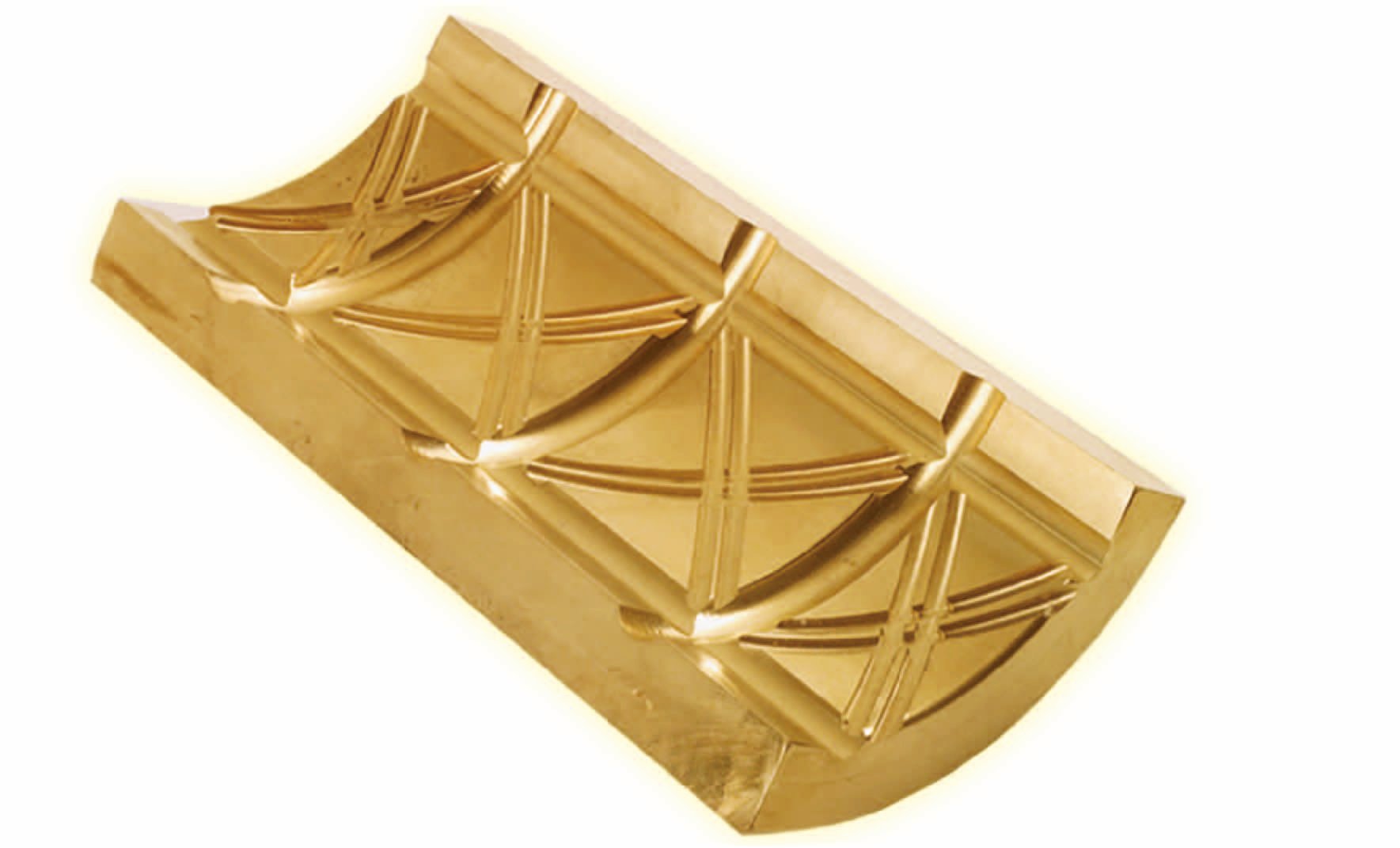
# How Wear Resistant Alloys Enhance Equipment Lifespan
Dec 19, 2025 5:58:48 PM | Written by [AMPCO METAL](https://academy.ampcometal.com/author/ampco-metal)
- [Tweet](https://twitter.com/share)
**Wear resistant alloys are critical to maintaining performance and reliability in industrial equipment. By minimizing friction and surface degradation, these materials extend component lifespan, reduce maintenance frequency, and ensure stable operation under continuous load.**
### Why Wear Resistant Alloys Matter
In industrial operations, every component exposed to motion or pressure faces gradual material loss. Over time, this wear changes surface geometry, increases friction, and alters the precision of moving parts. The result is higher energy consumption, slower production rates, and premature equipment failure.
Wear resistant alloys are designed to counter these effects by combining hardness, strength, and stability under load. Their structure limits surface deformation and material transfer, even in environments with high contact pressure or abrasive particles. Selecting the right alloy for each application can significantly improve service life, reducing downtime and maintaining consistent output quality across production cycles.
[If you are looking for more in-depth information, you can download our latest detailed technical paper: Improving Wear Resistance with High-Performance Copper Alloys](https://academy.ampcometal.com/landing-page-wear-resistance-2025?hsLang=en)
### How Wear Affects Equipment Performance Over Time
As mechanical components operate, continuous friction and contact stress gradually change the condition of their surfaces. Even small amounts of wear can influence overall system performance by increasing clearances, altering load distribution, and raising vibration levels. These changes accumulate and reduce the mechanical efficiency of the equipment.
When wear progresses unchecked, several performance issues emerge:
- **Loss of dimensional accuracy:** Components no longer fit precisely, reducing stability and alignment.
- **Increased friction and heat generation:** Surfaces require more energy to move under the same load, raising operating temperatures.
- **Reduced lubrication efficiency:** Worn surfaces disrupt lubricant films, accelerating further wear.
- **Higher maintenance frequency:** Parts require earlier replacement to prevent total equipment failure.
Over time, this degradation limits the machine’s ability to operate at designed speeds or tolerances. In many cases, the result is not sudden failure, but a steady decline in productivity and output quality that directly affects operational costs.
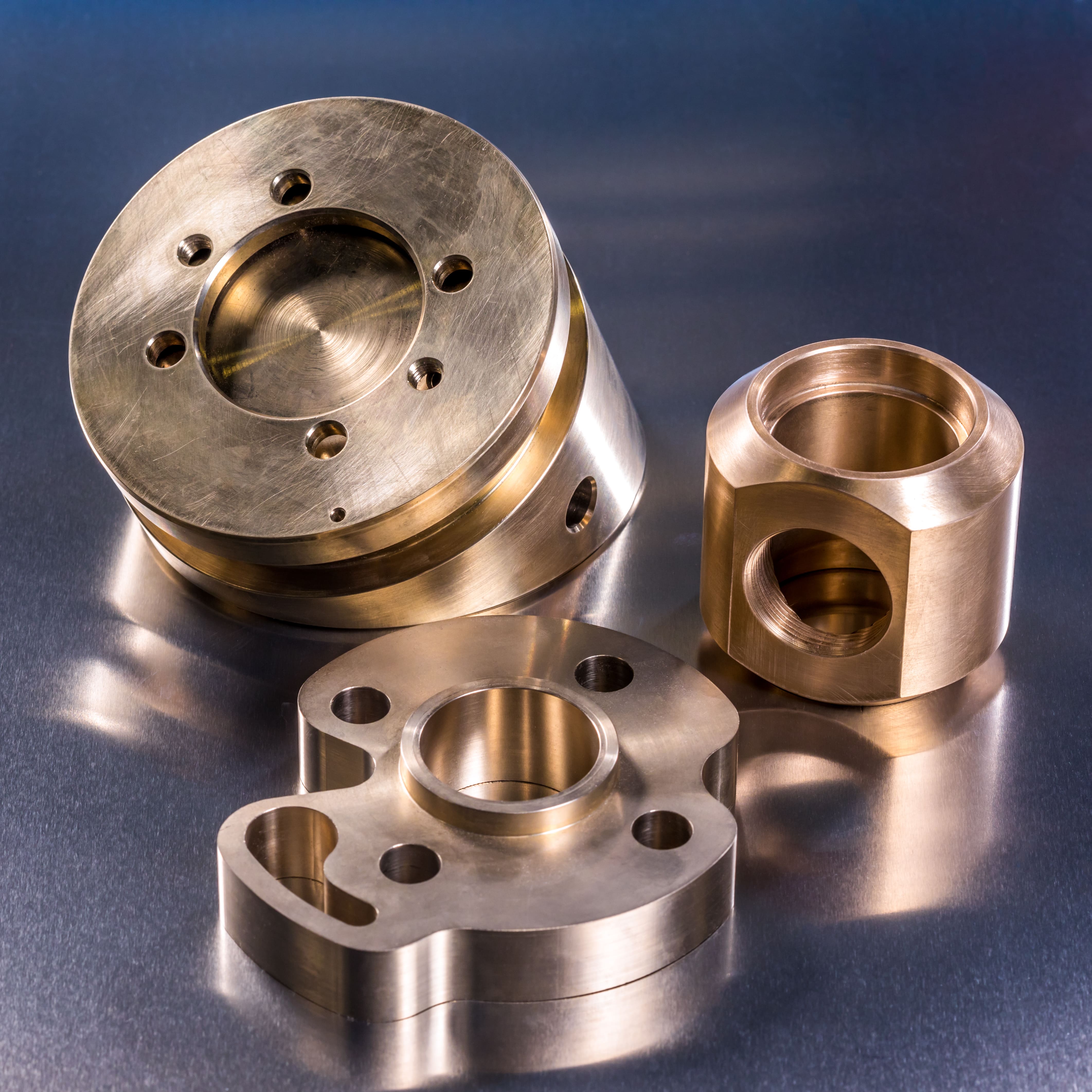
*Wear resistant parts made from AMPCO® Aluminum Bronze and AMPCOLOY® alloys*
### Key Properties of Wear Resistant Alloys
Wear resistant alloys achieve longer service life through a combination of mechanical and structural properties that allow them to endure repeated contact and stress without surface failure. The most important of these properties are hardness, strength, and dimensional stability.
- **Hardness:** High hardness values protect the surface from abrasion and micro-ploughing. Alloys such as AMPCO® M4 and AMPCOLOY® 83, with Brinell hardness up to 300 HBW and 360 HBW respectively, offer outstanding resistance to material removal.
- **Tensile and yield strength:** These determine the alloy’s ability to resist deformation under a constant load. AMPCO® 45 and AMPCO® M4 reach tensile strengths between 800 and 1000 MPa, maintaining surface integrity even under heavy stress.
- **Ductility and elasticity:** Controlled ductility helps absorb impact forces without cracking, while a high modulus of elasticity preserves the part’s shape under cyclic loads.
- **Friction and sliding behavior:** Low-friction characteristics reduce galling and adhesive wear, improving movement between mating parts.
Together, these properties ensure that [wear resistant alloys](https://www.ampcometal.com/applications/wear-resistance/)maintain their mechanical and dimensional stability over time, allowing equipment to perform consistently in harsh or high-load environments.
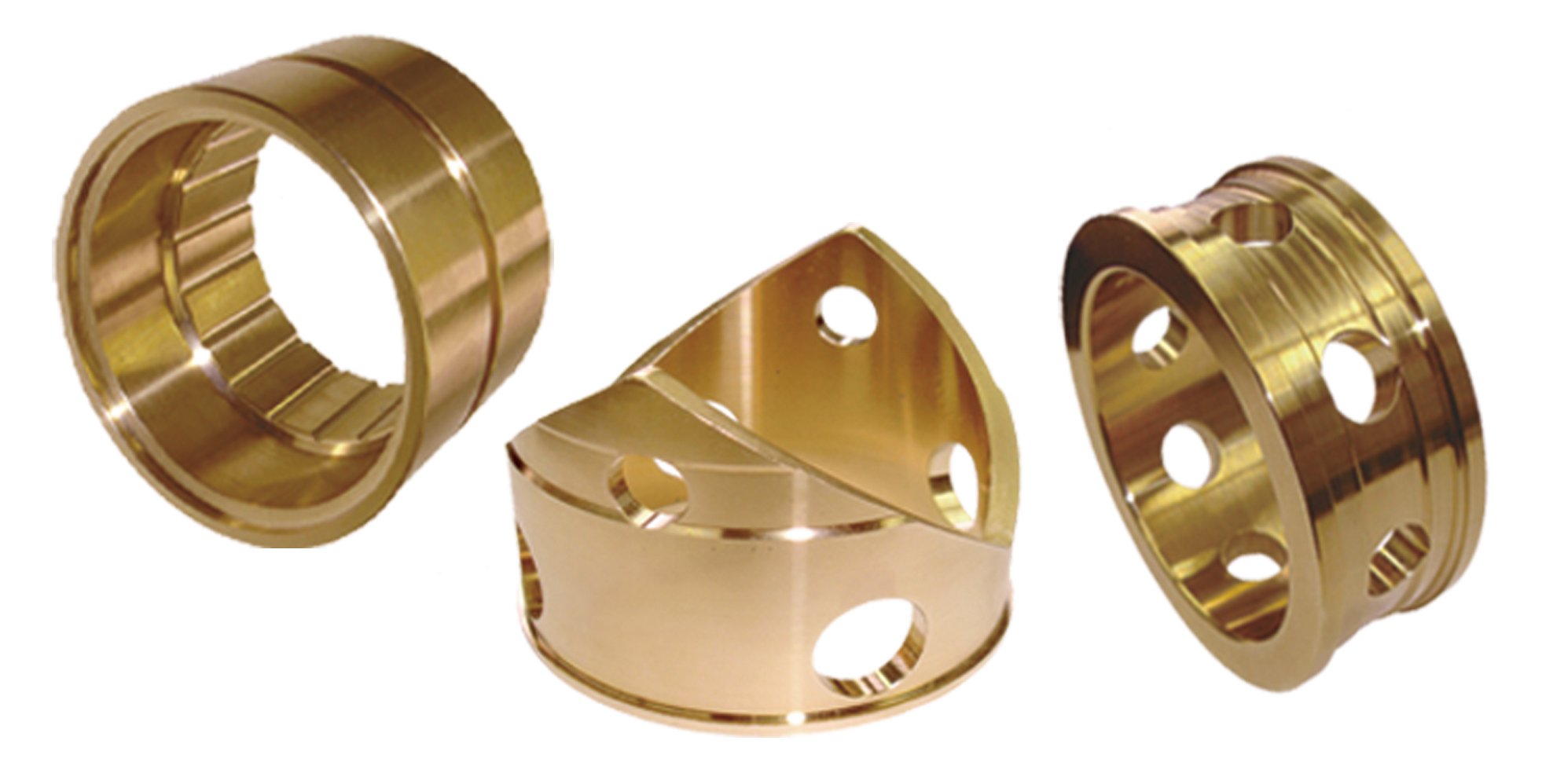*Different bushings from AMPCO® Aluminum Bronze for the aerospace and offshore industries*
### Benefits of Using AMPCO Alloys in High-Wear Applications
AMPCO alloys are engineered to maintain performance where standard steels and bronzes fail. Their advanced metallurgy provides a reliable balance between hardness, strength, and sliding properties, reducing the rate of wear and extending tool and component lifespan.
- [**AMPCO® 45**](https://www.ampcometal.com/products/ampco-aluminium-bronze/ampco-45/) combines good hardness with ductility, making it ideal for bushings, wear plates, and sliding elements. Its structure ensures stable wear behavior under continuous motion and contact stress.
- [**AMPCO® M4**](https://www.ampcometal.com/products/ampco-aluminium-bronze/ampco-m4/) provides exceptional wear resistance in heavy-duty environments. With hardness up to 300 HBW and high tensile strength, it maintains surface stability and prevents galling even under high contact pressure.
- [**AMPCOLOY® 83**](https://www.ampcometal.com/products/ampcoloy-high-copper-alloy/ampcoloy-83/) offers both high hardness and conductivity, making it suitable for applications that demand wear resistance alongside thermal or electrical transfer, such as welding electrodes and mold inserts.
In comparison to conventional materials, AMPCO alloys provide:
- **Longer service intervals and reduced maintenance frequency.**
- **Greater dimensional accuracy across extended production runs.**
- **Improved surface finish and reduced galling or scoring.**
- **Lower cost per part over time due to fewer replacements.**
These characteristics make AMPCO alloys a dependable choice for demanding industrial applications where wear resistance directly influences efficiency and operating costs.
### Final Thoughts
Wear resistant alloys play a decisive role in extending the lifespan and reliability of industrial equipment. Their combination of hardness, strength, and surface stability minimizes friction and material loss, ensuring components continue to perform under high load and temperature. AMPCO alloys such as AMPCO® 45, AMPCO® M4, and AMPCOLOY® 83 have proven their ability to deliver consistent results, maintaining dimensional accuracy and reducing downtime across a wide range of applications.
For detailed technical data, performance comparisons, and real-world results, download the full technical paper *“Improving Wear Resistance with High-Performance Copper Alloys.”* To learn more about alloy performance, wear mechanisms, and application insights, visit the [**AMPCO Academy**](https://academy.ampcometal.com/?hsLang=en) for expert-level articles and industry-focused knowledge.
*[](https://academy.ampcometal.com/landing-page-wear-resistance-2025?hsLang=en)*
*[](https://academy.ampcometal.com/hs/cta/wi/redirect?encryptedPayload=AVxigLK3oRnuF9m9y4dNQXKf8u9SN572R9e3C%2BviOsinOrQwVB6PybWAQjLEzLE%2FNtBwBfZ8N8h7hrNwyDRS%2BEF51Vduwizg18Qi6Tn%2FC6KUGkn4T%2BL8NUPCcSuq%2B%2BeuZLGx%2BvXZMcR4wfLFCDGGvO9N%2BHANJ%2F99uFF30tNm65hbe2phldh7RMbSe04ZkRZ55M9XJqmt98Fs8ZisRjs1tyivVA19AJs%3D&webInteractiveContentId=199253833889&portalId=5331421&hsLang=en)*
---
[](https://cta-redirect.hubspot.com/cta/redirect/5331421/8da01823-dd9b-42be-91b8-c4efd4d4c1ea)
-
-
-
-
- [Terms of use](https://www.ampcometal.com/terms-of-use/)
- [Privacy](https://www.ampcometal.com/privacy/)
- [Links](https://www.ampcometal.com/links/)
- [Sitemap](https://www.ampcometal.com/sitemap/)
- [Code of ethics and conduct](https://www.ampcometal.com/documents/CODE-of-ETHICS-and-CONDUCT.pdf)
© 2026 AMPCO METAL