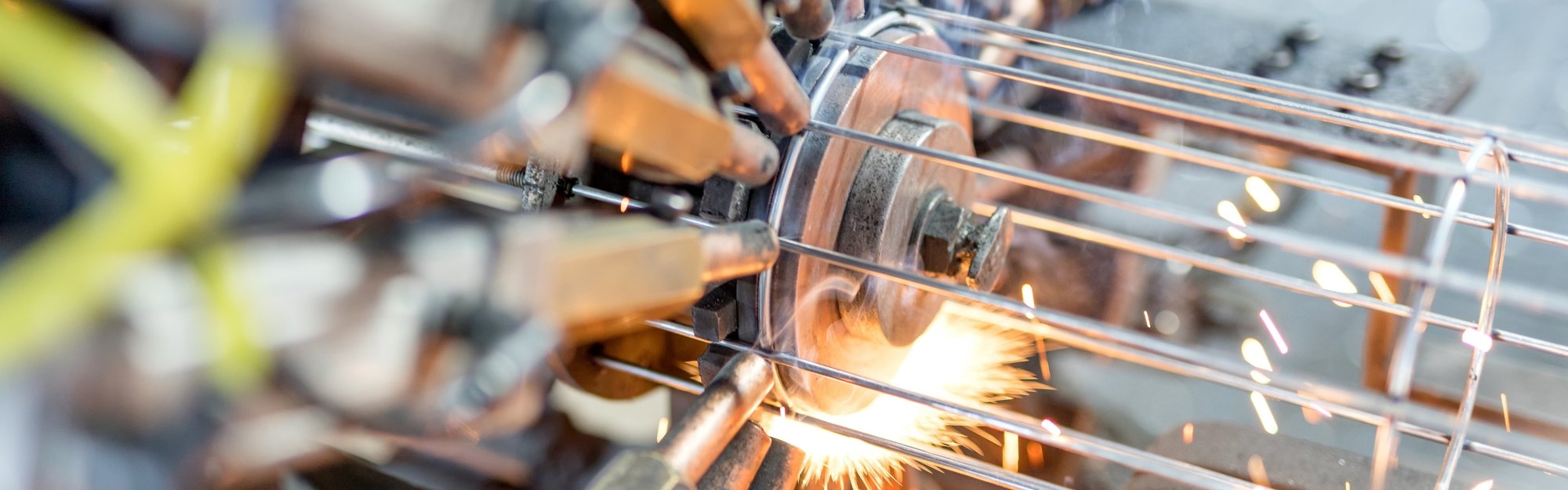
Welding electrode lifespan is often limited by how well the alloy holds its properties under repeated heat and force. Copper alloy microstructure drives electrode tip life by controlling softening, deformation, and thermal fatigue of electrodes, all within the hardness versus conductivity tradeoff.
Alloy Structure Is What the Electrode “Runs On”
In resistance welding, electrodes operate in a cycle of high current, concentrated heating at the contact zone, and repeated mechanical loading. Over time, electrodes fail less from sudden damage and more from gradual change: the tip face grows, the geometry drifts, pickup becomes more likely, and the process window narrows. That progression is the practical meaning of welding electrode lifespan.
Those changes are not only driven by weld settings. They are driven by the alloy’s internal structure. Copper alloy microstructure determines how the material responds to temperature spikes and compressive loading, how quickly it softens, and how well it resists thermal fatigue of electrodes over long runs. This is also where the hardness versus conductivity tradeoff becomes real: the best electrode is the one that keeps tip behavior stable without sacrificing the current and heat flow the process depends on.
For a more comprehensive look at the given topic, download our free technical paper:
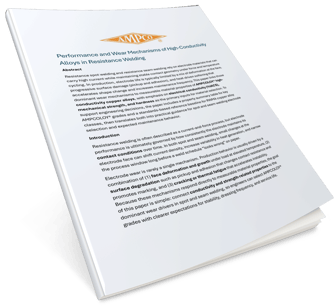
Performance and Wear Mechanisms of High-Conductivity Alloys in Resistance Welding
Why Electrode Lifespan Is a Materials Question
In production, electrode tip life is rarely limited by “running out of copper.” It is usually limited by loss of stability at the working face. Once the tip deforms, softens, or changes surface condition, the contact area and current density shift. Heat generation moves, nugget formation changes, and the station becomes harder to control. At that point, the electrode may still make welds, but it no longer makes them consistently.
That’s why welding electrode lifespan depends on how the alloy behaves under real operating conditions: repeated thermal spikes, compressive loads, and constant surface interaction with the workpiece. Two electrodes can look similar on paper but perform very differently once duty cycle, cooling, and material surface conditions are involved. The material’s resistance to softening and deformation and its ability to survive thermal fatigue of electrodes is what determines how long the electrode stays within a usable geometry and maintenance window.
This is also where the hardness versus conductivity tradeoff matters. High conductivity supports current and heat transfer, which helps stabilize the process thermally. Higher strength and hardness help resist face growth and mushrooming, which stabilizes the contact condition mechanically. Electrode material selection is essentially the task of balancing those requirements so that the tip remains stable, predictable, and maintainable for as many cycles as possible.
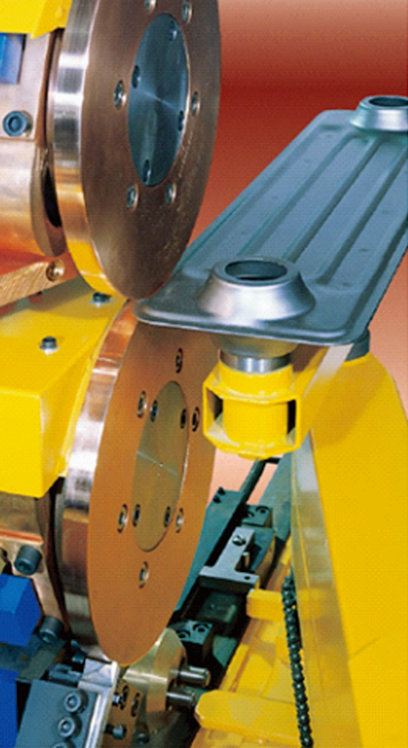 Resistance seam welding using AMPCOLOY® welding wheels
Alloy Structure Basics That Matter in Electrodes
When we talk about copper alloy microstructure, we’re talking about what controls strength, softening resistance, and fatigue behavior inside a material that still has to conduct current efficiently. For welding electrodes, a few structural mechanisms matter more than the rest because they directly affect electrode tip lifespan.
- Strengthening mechanism and conductivity impact:
Copper alloys gain strength through different mechanisms, and each one affects conductivity differently. In practice, the more you strengthen an alloy, the more you tend to reduce conductivity. That is the core hardness versus conductivity tradeoff. The right balance depends on whether the limiting failure mode is thermal instability (heat buildup) or mechanical instability (rapid face growth). - Resistance to softening at operating temperature:
Electrode tips experience repeated temperature spikes. If the microstructure loses strength quickly as temperature rises, the tip deforms faster under force. That accelerates mushrooming and face growth and shortens electrode tip life. Alloys designed to retain strength at elevated temperatures slow this progression. - Grain structure and deformation behavior:
Grain size and structure influence how the material accommodates repeated compressive loading at the face. Stable grain structure helps reduce rapid plastic flow. Unstable structure can lead to faster geometry drift, especially under high force or long weld times. - Surface interaction and pickup tendency:
Microstructure also affects how the surface behaves when it contacts hot workpiece material. If the electrode face becomes prone to adhesion or pickup, surface condition changes rapidly, and the process becomes less predictable. Once pickup starts, it often drives a faster wear loop through unstable contact resistance and more frequent dressing. - Thermal fatigue of electrodes:
Thermal cycling introduces repeated expansion and contraction near the surface. Over many cycles, this can initiate cracking or surface damage, depending on the alloy’s strength, ductility, and its ability to tolerate thermal gradients. Thermal fatigue becomes more critical when cooling is weak or the duty cycle is high.
-1.jpg?width=1200&height=800&name=Blog%20images%201200x800%20(8)-1.jpg)
AMPCOLOY® welding wheels with superior surface finish
How Structure Shows Up on the Shop Floor
Microstructure is not something you “see” during welding, but you see its effects in how the station behaves over time. The most common signs are mechanical drift at the tip, changing surface interaction, and a maintenance interval that collapses faster than expected.
- Tip face growth and mushrooming rate:
Alloys that soften under heat and load tend to show rapid contact-area growth. The station may start strong, then require parameter compensation as current density drops. Alloys with better hot strength slow this progression, helping the electrode hold a stable geometry for longer. - Dressing frequency and stability between dresses:
Electrode tip life is often measured by how many welds you can run before dressing is required and how consistent results remain between dressing events. Microstructures that resist deformation and pickup extend that window and reduce variation in weld quality. - Pickup, sticking, and surface marking trends:
When an electrode becomes prone to adhesion, pickup can start suddenly and then accelerate. Operators often notice an increase in marking, inconsistent appearance, or spatter events that were not present earlier. This is often tied to surface behavior at temperature, not just settings. - Thermal drift during the shift:
If an alloy’s balance of conductivity and strength is not aligned with the duty cycle and cooling, performance can drift later in the run. Symptoms often include higher marking, more variation in nugget formation, and a tighter process window even though the controller settings are unchanged. - Cracking and surface damage from thermal fatigue:
In high-duty applications, repeated thermal cycling can lead to surface cracking or damage, especially when cooling is inconsistent or the thermal gradient at the tip is severe. This is one of the clearer indicators that thermal fatigue of electrodes is becoming a limiting mechanism.
Final Thoughts
Welding electrode lifespan is ultimately determined by how long the tip stays mechanically and thermally stable under real production conditions. Copper alloy microstructure controls that stability by setting how the electrode resists softening, deformation, pickup, and thermal fatigue. When the alloy structure matches the duty cycle and cooling conditions, electrode tip life becomes more predictable, dressing intervals extend, and weld consistency is easier to maintain.
For a deeper, data-backed breakdown of electrode wear mechanisms and how high-conductivity copper alloys perform in resistance welding, download our technical paper. For additional technical articles and practical guidance on electrode performance and material selection, visit the AMPCO Academy.