---
title: Corrosion Resistant Materials for Demanding Applications
description: Demanding industrial applications rely on corrosion resistant materials to maintain structural integrity and reliable performance over time.
image: https://academy.ampcometal.com/hubfs/Banner%20image%20-%20corrosion.jpg
---
[](https://academy.ampcometal.com/)
- Products
- AMPCO® Aluminium Bronze
- [AMPCO® 8](https://www.ampcometal.com/products/ampco-aluminum-bronze/ampco-8/)
- [AMPCO® 15](https://www.ampcometal.com/products/ampco-aluminum-bronze/ampco-15/)
- [AMPCO® 18](https://www.ampcometal.com/products/ampco-aluminum-bronze/ampco-18/)
- [AMPCO® 18.136](https://www.ampcometal.com/products/ampco-aluminum-bronze/ampco-18-136/)
- [AMPCO® 18.22](https://www.ampcometal.com/products/ampco-aluminum-bronze/ampco-18-22//)
- [AMPCO® 18.23](https://www.ampcometal.com/products/ampco-aluminum-bronze/ampco-18-23/)
- [AMPCO® 21](https://www.ampcometal.com/products/ampco-aluminum-bronze/ampco-21/)
- [AMPCO® 22](https://www.ampcometal.com/products/ampco-aluminum-bronze/ampco-22/)
- [AMPCO® 25](https://www.ampcometal.com/products/ampco-aluminum-bronze/ampco-25/)
- [AMPCO® 26](https://www.ampcometal.com/products/ampco-aluminum-bronze/ampco-26/)
- [AMPCO® 45](https://www.ampcometal.com/products/ampco-aluminum-bronze/ampco-45/)
- [AMPCO® M4](https://www.ampcometal.com/products/ampco-aluminum-bronze/ampco-m4/)
- AMPCOLOY® High Copper Alloy
- [AMPCOLOY® 83](https://www.ampcometal.com/products/ampcoloy-high-copper-alloy/ampcoloy-83/)
- [AMPCOLOY® 88](https://www.ampcometal.com/products/ampcoloy-high-copper-alloy/ampcoloy-88/)
- [AMPCOLOY® 89](https://www.ampcometal.com/products/ampcoloy-high-copper-alloy/ampcoloy-89/)
- [AMPCOLOY® 91](https://www.ampcometal.com/products/ampcoloy-high-copper-alloy/ampcoloy-91/)
- [AMPCOLOY® 95](https://www.ampcometal.com/products/ampcoloy-high-copper-alloy/ampcoloy-95/)
- [AMPCOLOY® 940](https://www.ampcometal.com/products/ampcoloy-high-copper-alloy/ampcoloy-940/)
- [AMPCOLOY® 944](https://www.ampcometal.com/products/ampcoloy-high-copper-alloy/ampcoloy-944/)
- [AMPCOLOY® 972](https://www.ampcometal.com/products/ampcoloy-high-copper-alloy/ampcoloy-972/)
- [Cu-W Sintered](https://www.ampcometal.com/products/ampcoloy-high-copper-alloy/cu-w-sintered)
- AMS Alloys
- [AMS 4590](https://www.ampcometal.com/products/ams-alloys/ams-4590/)
- [AMS 4640](https://www.ampcometal.com/products/ams-alloys/ams-4640/)
- [AMS 4880](https://www.ampcometal.com/products/ams-alloys/ams-4880/)
- [AMS 4881](https://www.ampcometal.com/products/ams-alloys/ams-4881/)
- [Standard Alloys](https://www.ampcometal.com/products/standard-alloys/)
- [Welding Wire](https://www.ampcowelding.com/)
- [Safety Tools](https://www.safetytools.com/)
- Solutions
- Applications
- [Wear Resistance](https://www.ampcometal.com/applications/wear-resistance/)
- [Corrosion Resistance](https://www.ampcometal.com/applications/corrosion-resistance/)
- [Metal Forming & Tooling](https://www.ampcometal.com/applications/metal-forming/)
- [Die Casting](https://www.ampcometal.com/applications/die-casting/)
- [Plastic Processing](https://www.ampcometal.com/applications/plastic-processing/)
- [Resistance Welding](https://www.ampcometal.com/applications/resistance-welding/)
- Industries
- [Aerospace](https://www.ampcometal.com/industries/aerospace/)
- [Automotive](https://www.ampcometal.com/industries/automotive/)
- [General Engineering](https://www.ampcometal.com/industries/general-engineering/)
- [Marine](https://www.ampcometal.com/industries/marine/)
- [Metal Forming](https://www.ampcometal.com/industries/metal-forming/)
- [Oil, Gas & Chemical](https://www.ampcometal.com/industries/oil-gas-chemical/)
- [Plastic Processing](https://www.ampcometal.com/industries/plastic-processing/)
- [Resistance Welding](https://www.ampcometal.com/industries/resistance-welding/)
- [Steel](https://www.ampcometal.com/industries/steel)
- [Hydrogen](https://www.ampcometal.com/industries/hydrogen)
- [Luxury](https://www.ampcometal.com/industries/luxury)
- [Finished Machine Parts](https://www.ampcometal.com/finished-machined-parts/)
- [Additive Manufacturing](https://www.ampcometal.com/additive-manufacturing/)
- [Technical Consulting](https://www.ampcometal.com/technical-consulting/)
- Who We Are
- [Sustainability](https://www.ampcometal.com/sustainability/)
- [Sustainability Management](https://www.ampcometal.com/sustainability/sustainability-management/)
- [Environment](https://www.ampcometal.com/sustainability/environment/)
- [Social](https://www.ampcometal.com/sustainability/social/)
- [Governance](https://www.ampcometal.com/sustainability/governance/)
- [Future Goals](https://www.ampcometal.com/sustainability/furure-goals/)
- [Our History](https://www.ampcometal.com/our-history/)
- [About Us](https://www.ampcometal.com/about-us/)
- [Working at AMPCO](https://www.ampcometal.com/working-at-ampco)
- [Working with AMPCO](https://www.ampcometal.com/working-with-ampco)
- Technical Hub
- Technical Data
- [Application Datasheets](https://www.ampcometal.com/application-datasheets/)
- [Technical Datasheets](https://www.ampcometal.com/technical-datasheets/)
- [Microcast® Technology](https://www.ampcometal.com/mirocast-technology/)
- [Machining Recommendations](https://www.ampcometal.com/machining-recommendations/)
- Documentation
- [Safety Data Sheets](https://www.ampcometal.com/safety-data-sheets/)
- [Certifications](https://www.ampcometal.com/certifications/)
- [Food Approval Data](https://www.ampcometal.com/food-approval-data/)
- [Sales Terms and Conditions](https://www.ampcometal.com/sales-terms-and-conditions/)
- [ATEX Certification Data](https://www.ampcometal.com/atex-certification-data/)
- [Product Selection Tool](https://www.ampcometal.com/product-selection-tool/)
- [Stock Availability](https://www.ampcometal.com/ssd/)
- [Academy](https://academy.ampcometal.com/)
- [Contact](https://www.ampcometal.com/contact-us/#contact-us)
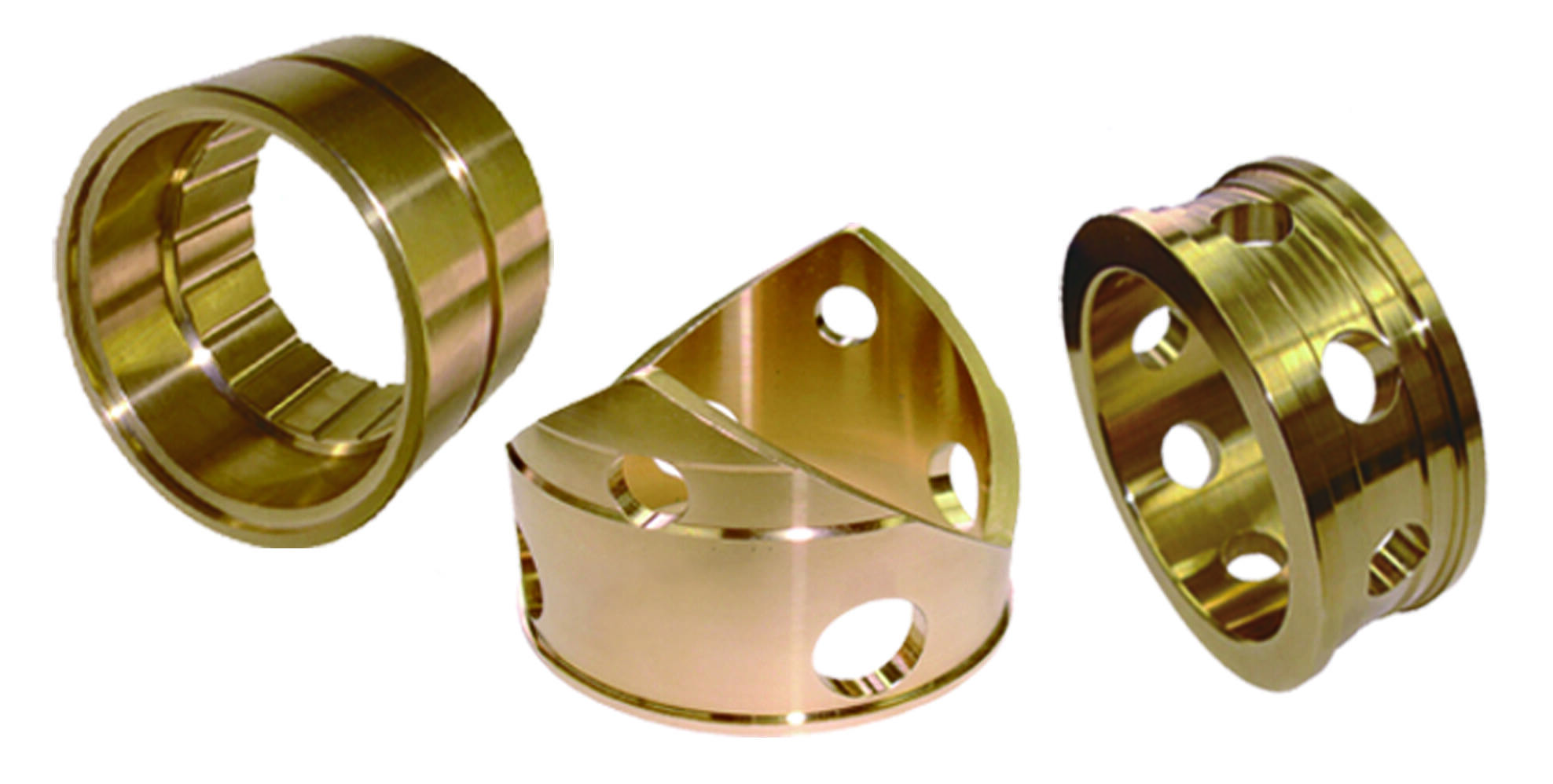
# Corrosion Resistant Materials for Demanding Applications
Dec 21, 2025 5:27:37 PM | Written by [AMPCO METAL](https://academy.ampcometal.com/author/ampco-metal)
- [Tweet](https://twitter.com/share)
**Corrosion resistant materials are essential in industries where metals face constant exposure to moisture, chemicals, or heat. They ensure equipment reliability, reduce maintenance costs, and extend service life even under the most demanding operating conditions.**
### Why Corrosion Resistance Matters in Modern Industry
In today’s manufacturing and processing industries, the use of corrosion resistant materials is essential for keeping equipment reliable and productive. Metals that can withstand exposure to moisture, chemicals, and heat play a vital role in reducing maintenance needs and avoiding costly downtime.
Corrosion doesn’t just affect appearance; it weakens structures, disrupts operations, and shortens equipment lifespan. That is why industries from power generation to metal forming depend on corrosion resistant materials to maintain performance and extend service life in demanding environments.
### The Science Behind Corrosion Resistance
[Corrosion resistance](https://www.ampcometal.com/applications/corrosion-resistance/) depends on how a metal reacts with its environment. When exposed to air or moisture, most metals form surface oxides. In some cases, these oxides are loose and flaky, allowing corrosion to spread. In others, they form a stable, protective layer that blocks further damage.
This natural barrier is what gives certain metals and alloys their durability. For example, aluminum forms a thin oxide film that seals the surface, while copper-based alloys like bronze develop a dense, adherent layer that slows down chemical reactions. The composition of the alloy, the environment it operates in, and the surface condition all influence how well this protection works.
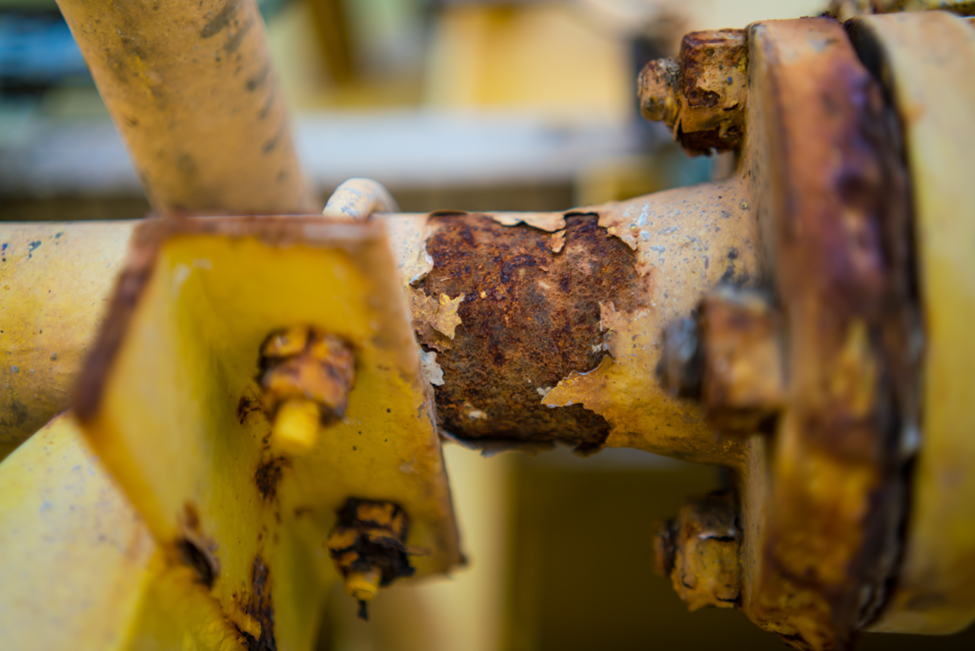
*A heavily corroded metal pipe section within an industrial structure*
### Common Corrosion Resistant Materials and Their Properties
Different materials offer varying levels of corrosion protection, depending on their composition and the environment they’re used in. Understanding these differences helps in selecting the right option for each application.
- **Stainless steel:** Contains chromium, which forms a thin oxide layer that protects the surface from rust and oxidation. It performs well in many environments but can still corrode in chloride-rich conditions.
- **Aluminum alloys:** Naturally build a protective oxide film that resists atmospheric corrosion and many chemicals. They are lightweight and often used where strength-to-weight ratio is important.
- **Titanium:** Extremely resistant to most forms of corrosion, including acids and seawater, but its high cost limits its use to specialized applications.
- **Copper and bronze alloys:** Offer excellent resistance to moisture, salts, and many industrial chemicals. Aluminum bronze, in particular, performs well in demanding environments, combining high strength with long-term corrosion protection.
Each of these materials provides a different balance of mechanical and chemical properties. Copper-based alloys stand out where both conductivity and corrosion resistance are needed, making them a dependable choice for demanding industrial conditions.
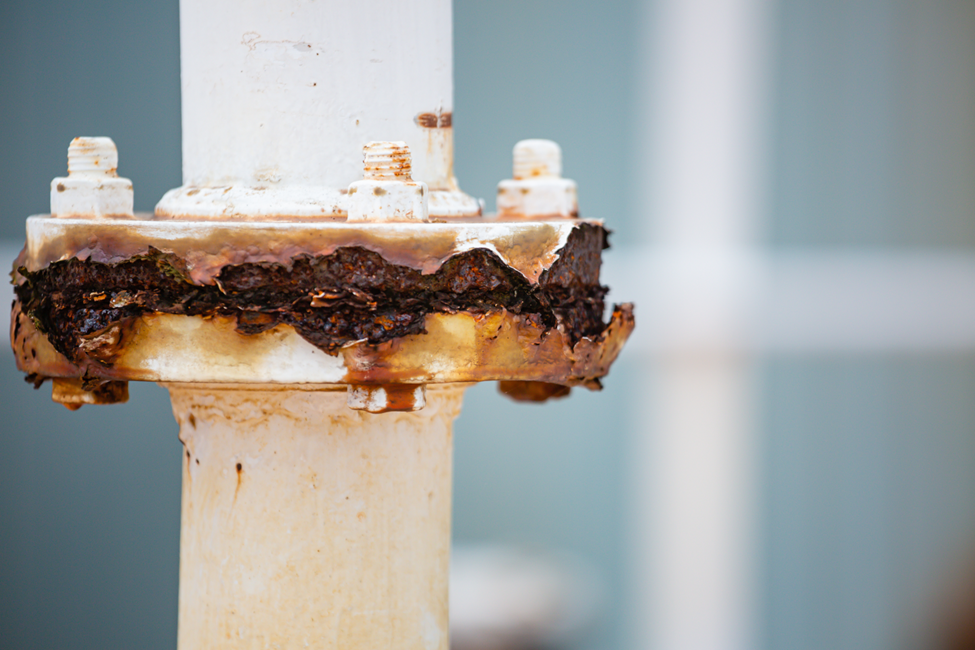
*Close-up of a corroded industrial tube joint section*
### Choosing the Right Material for Harsh Environments
Selecting the right material for harsh environments requires more than simply comparing corrosion rates. It means understanding how an alloy performs under mechanical stress, temperature changes, and exposure to chemicals or saltwater. Materials that can maintain both strength and corrosion resistance are essential where reliability and uptime matter most.
AMPCO alloys were developed for exactly these conditions. Their unique copper-based compositions form dense, stable oxide layers that protect against chemical attack and wear. Alloys such as **[AMPCO® 8](https://www.ampcometal.com/products/ampco-aluminium-bronze/ampco-8/), [AMPCO® 18](https://www.ampcometal.com/products/ampco-aluminium-bronze/ampco-18/)**and [**AMPCO® 45**](https://www.ampcometal.com/products/ampco-aluminium-bronze/ampco-45/) perform exceptionally well in demanding environments like marine components, industrial pumps, and forming tools exposed to moisture or abrasive media. They not only resist corrosion but also provide excellent conductivity, machinability, and dimensional stability, all qualities that ensure long service life with minimal maintenance.
### Final Thoughts
Corrosion resistance is one of the key factors that determine how long a component will last and how well it will perform. Choosing materials that can handle aggressive environments helps reduce downtime, extend service life, and ensure consistent results over time.
Professionals who want to learn more about corrosion resistant materials and their behavior in real applications can explore detailed articles and technical insights on the[AMPCO Academy](https://academy.ampcometal.com/?hsLang=en), where topics like alloy selection and performance in challenging conditions are explained in practical terms.
---
-
-
-
-
- [Terms of use](https://www.ampcometal.com/terms-of-use/)
- [Privacy](https://www.ampcometal.com/privacy/)
- [Links](https://www.ampcometal.com/links/)
- [Sitemap](https://www.ampcometal.com/sitemap/)
- [Code of ethics and conduct](https://www.ampcometal.com/documents/CODE-of-ETHICS-and-CONDUCT.pdf)
© 2026 AMPCO METAL