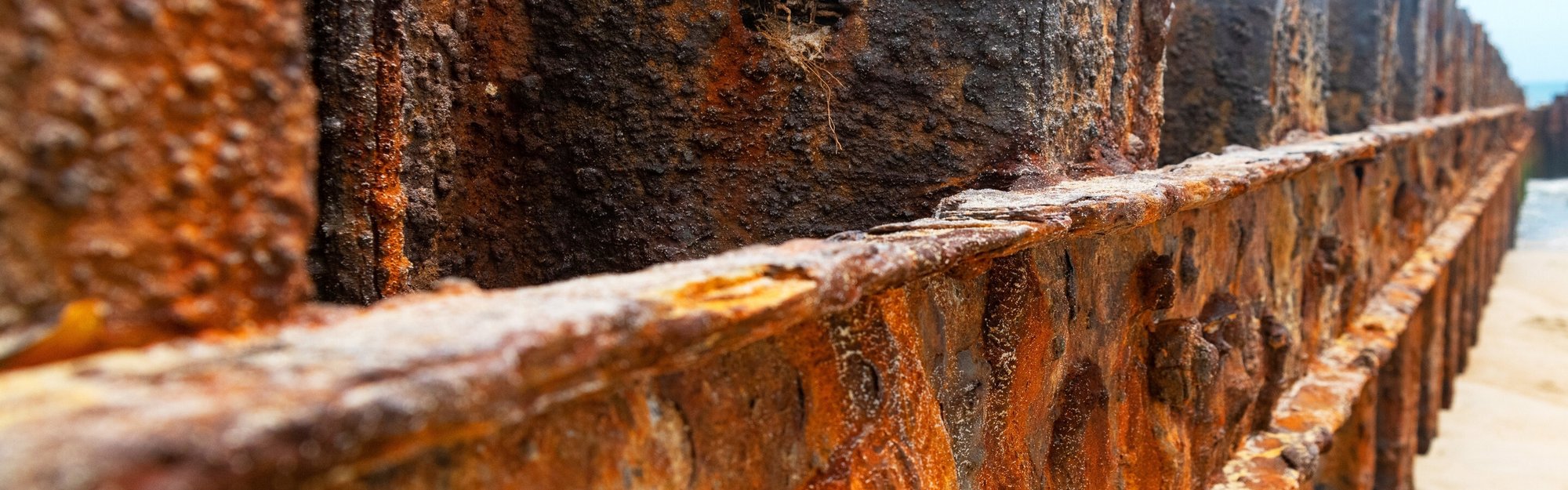
Salt water corrosion severely impacts marine equipment, causing metal loss and costly repairs. Aluminum bronze stands out for its ability to resist this harsh environment, offering long-lasting protection and performance in demanding sea conditions.
Corrosion Challenges in the Marine Industry
Marine environments expose metals to one of the harshest forms of corrosion. Constant contact with salt water, oxygen, and fluctuating temperatures accelerates chemical reactions that weaken materials and shorten service life. Traditional steels and brasses often struggle to maintain reliability under these conditions.
The marine industry faces continuous maintenance demands, from ship components to port machinery. Using alloys specifically designed to resist salt water corrosion is essential to reduce downtime and preserve mechanical integrity in long-term operation.
Why Salt Water Corrosion Is Especially Aggressive at Sea
Salt water corrosion is more aggressive at sea because of the unique combination of chemical and mechanical factors present in marine environments. Seawater contains high concentrations of chlorides and sulfates that penetrate metal surfaces and disrupt protective oxide layers. Once these layers break down, corrosion spreads rapidly, especially in areas with continuous wetting and drying cycles.
Mechanical stresses also intensify corrosion. Waves, turbulence, and flow velocity cause erosion and cavitation, removing protective films and exposing fresh metal to attack. Combined with temperature variations and oxygen-rich conditions, these factors make the ocean one of the most corrosive natural environments for metallic components.
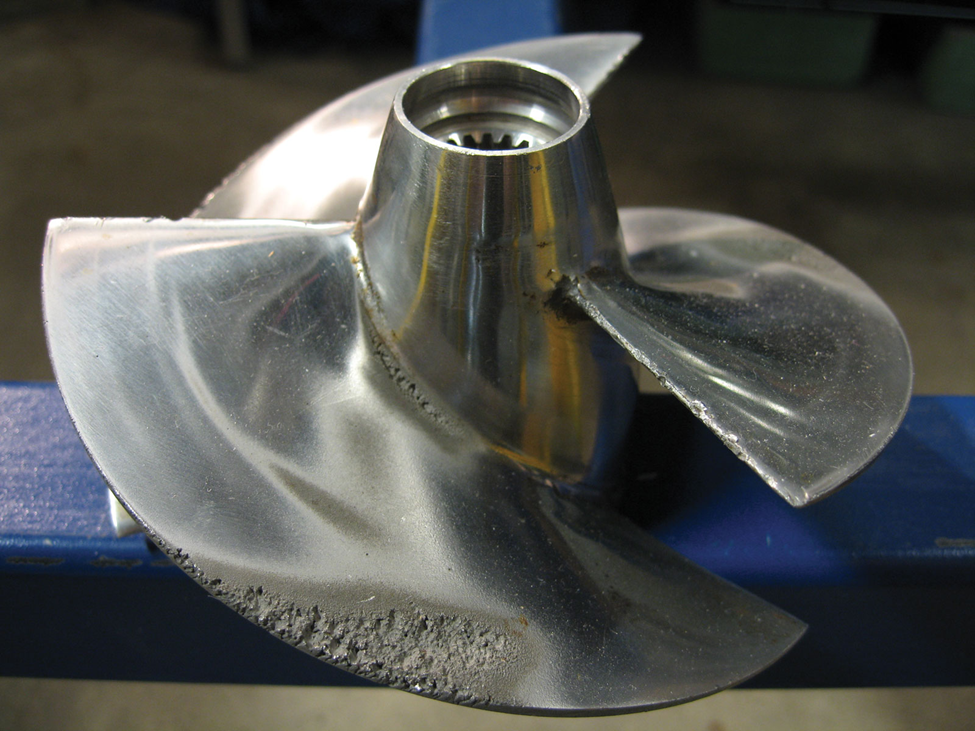 The effects of cavitation on a boat propeller made from standard materials
How Aluminum Bronze Provides Superior Protection in Marine Environments
Aluminum bronze resists salt water corrosion through the formation of a dense, adherent oxide layer that shields the underlying metal from further attack. This film, primarily composed of aluminum oxide, remains stable even in turbulent and oxygen-rich conditions, preventing pitting and crevice corrosion that often affect other metals.
The alloy’s composition further enhances its performance. The presence of nickel and iron in certain grades, such as AMPCO® 18, AMPCO® 45 and AMPCO® M4, improve resistance to localized corrosion and strengthen the protective film. These properties allow aluminum bronzes to maintain both mechanical strength and corrosion resistance, even in high-velocity seawater or splash-zone exposure, where steels and brasses degrade quickly.
Common Marine Applications Using AMPCO® Aluminum Bronze
AMPCO® Aluminum Bronze alloys are engineered for marine systems where exposure to chlorides, turbulence, and mechanical load converge. Their protective oxide films remain stable under flow, while their high tensile and fatigue strength make them suitable for components subjected to both corrosion and wear.
Typical marine applications include:
- Bearings and bushings: AMPCO® 8 and AMPCO® 18 perform well under mixed friction and seawater lubrication, resisting pitting and galling.
- Pump and valve components: AMPCO® 45 provides strong resistance to erosion–corrosion in high-velocity seawater circuits and brine systems.
- Propeller shafts and couplings: Nickel-aluminum bronzes such as AMPCO® 45 and M4 maintain surface integrity under dynamic seawater exposure and cyclic stresses.
- Thrust washers and wear plates: AMPCO® 8 ensures low friction and long service life in contact with steel counterfaces.
- Seawater fittings and connectors: Copper-based alloys prevent galvanic imbalance when properly paired with stainless steels or other noble materials.
These applications demonstrate how AMPCO® Aluminum Bronze achieves a balance between corrosion protection, mechanical strength, and long-term dimensional stability in marine environments.
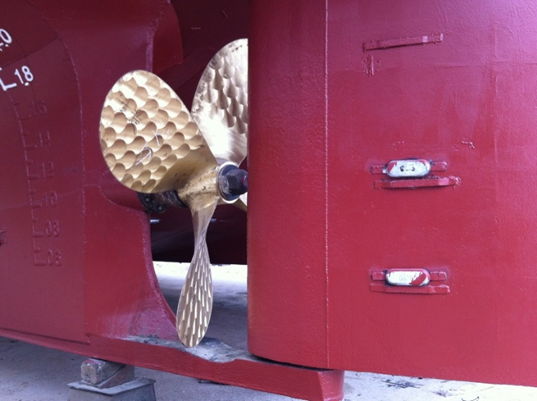
A newly installed boat propeller made from AMPCO® 18
Final Thoughts
Salt water corrosion continues to be one of the most demanding challenges in marine engineering, affecting both performance and maintenance cycles. AMPCO® Aluminum Bronzes provide a proven and measurable advantage by combining mechanical strength with long-term corrosion resistance, even in turbulent seawater conditions. Their stable oxide films, resistance to pitting, and high load-bearing capacity make them a dependable choice for marine components exposed to chlorides and continuous motion.
Readers interested in the science and performance data behind these alloys can find additional technical insights on the AMPCO Academy, where corrosion behavior, alloy structure, and field performance are explored in depth.
For a more comprehensive understanding of how AMPCO® alloys improve reliability in seawater and brine environments, download our technical paper: “Improving Corrosion Resistance of Components by Using AMPCO Alloys.”