---
title: The Effects of Corrosion on Industrial Efficiency
description: Corrosion reduces industrial efficiency by increasing friction, energy consumption, downtime, and long-term maintenance requirements.
image: https://academy.ampcometal.com/hubfs/Rusted%20gears.jpeg
---
[](https://academy.ampcometal.com/)
- Products
- AMPCO® Aluminium Bronze
- [AMPCO® 8](https://www.ampcometal.com/products/ampco-aluminum-bronze/ampco-8/)
- [AMPCO® 15](https://www.ampcometal.com/products/ampco-aluminum-bronze/ampco-15/)
- [AMPCO® 18](https://www.ampcometal.com/products/ampco-aluminum-bronze/ampco-18/)
- [AMPCO® 18.136](https://www.ampcometal.com/products/ampco-aluminum-bronze/ampco-18-136/)
- [AMPCO® 18.22](https://www.ampcometal.com/products/ampco-aluminum-bronze/ampco-18-22//)
- [AMPCO® 18.23](https://www.ampcometal.com/products/ampco-aluminum-bronze/ampco-18-23/)
- [AMPCO® 21](https://www.ampcometal.com/products/ampco-aluminum-bronze/ampco-21/)
- [AMPCO® 22](https://www.ampcometal.com/products/ampco-aluminum-bronze/ampco-22/)
- [AMPCO® 25](https://www.ampcometal.com/products/ampco-aluminum-bronze/ampco-25/)
- [AMPCO® 26](https://www.ampcometal.com/products/ampco-aluminum-bronze/ampco-26/)
- [AMPCO® 45](https://www.ampcometal.com/products/ampco-aluminum-bronze/ampco-45/)
- [AMPCO® M4](https://www.ampcometal.com/products/ampco-aluminum-bronze/ampco-m4/)
- AMPCOLOY® High Copper Alloy
- [AMPCOLOY® 83](https://www.ampcometal.com/products/ampcoloy-high-copper-alloy/ampcoloy-83/)
- [AMPCOLOY® 88](https://www.ampcometal.com/products/ampcoloy-high-copper-alloy/ampcoloy-88/)
- [AMPCOLOY® 89](https://www.ampcometal.com/products/ampcoloy-high-copper-alloy/ampcoloy-89/)
- [AMPCOLOY® 91](https://www.ampcometal.com/products/ampcoloy-high-copper-alloy/ampcoloy-91/)
- [AMPCOLOY® 95](https://www.ampcometal.com/products/ampcoloy-high-copper-alloy/ampcoloy-95/)
- [AMPCOLOY® 940](https://www.ampcometal.com/products/ampcoloy-high-copper-alloy/ampcoloy-940/)
- [AMPCOLOY® 944](https://www.ampcometal.com/products/ampcoloy-high-copper-alloy/ampcoloy-944/)
- [AMPCOLOY® 972](https://www.ampcometal.com/products/ampcoloy-high-copper-alloy/ampcoloy-972/)
- [Cu-W Sintered](https://www.ampcometal.com/products/ampcoloy-high-copper-alloy/cu-w-sintered)
- AMS Alloys
- [AMS 4590](https://www.ampcometal.com/products/ams-alloys/ams-4590/)
- [AMS 4640](https://www.ampcometal.com/products/ams-alloys/ams-4640/)
- [AMS 4880](https://www.ampcometal.com/products/ams-alloys/ams-4880/)
- [AMS 4881](https://www.ampcometal.com/products/ams-alloys/ams-4881/)
- [Standard Alloys](https://www.ampcometal.com/products/standard-alloys/)
- [Welding Wire](https://www.ampcowelding.com/)
- [Safety Tools](https://www.safetytools.com/)
- Solutions
- Applications
- [Wear Resistance](https://www.ampcometal.com/applications/wear-resistance/)
- [Corrosion Resistance](https://www.ampcometal.com/applications/corrosion-resistance/)
- [Metal Forming & Tooling](https://www.ampcometal.com/applications/metal-forming/)
- [Die Casting](https://www.ampcometal.com/applications/die-casting/)
- [Plastic Processing](https://www.ampcometal.com/applications/plastic-processing/)
- [Resistance Welding](https://www.ampcometal.com/applications/resistance-welding/)
- Industries
- [Aerospace](https://www.ampcometal.com/industries/aerospace/)
- [Automotive](https://www.ampcometal.com/industries/automotive/)
- [General Engineering](https://www.ampcometal.com/industries/general-engineering/)
- [Marine](https://www.ampcometal.com/industries/marine/)
- [Metal Forming](https://www.ampcometal.com/industries/metal-forming/)
- [Oil, Gas & Chemical](https://www.ampcometal.com/industries/oil-gas-chemical/)
- [Plastic Processing](https://www.ampcometal.com/industries/plastic-processing/)
- [Resistance Welding](https://www.ampcometal.com/industries/resistance-welding/)
- [Steel](https://www.ampcometal.com/industries/steel)
- [Hydrogen](https://www.ampcometal.com/industries/hydrogen)
- [Luxury](https://www.ampcometal.com/industries/luxury)
- [Finished Machine Parts](https://www.ampcometal.com/finished-machined-parts/)
- [Additive Manufacturing](https://www.ampcometal.com/additive-manufacturing/)
- [Technical Consulting](https://www.ampcometal.com/technical-consulting/)
- Who We Are
- [Sustainability](https://www.ampcometal.com/sustainability/)
- [Sustainability Management](https://www.ampcometal.com/sustainability/sustainability-management/)
- [Environment](https://www.ampcometal.com/sustainability/environment/)
- [Social](https://www.ampcometal.com/sustainability/social/)
- [Governance](https://www.ampcometal.com/sustainability/governance/)
- [Future Goals](https://www.ampcometal.com/sustainability/furure-goals/)
- [Our History](https://www.ampcometal.com/our-history/)
- [About Us](https://www.ampcometal.com/about-us/)
- [Working at AMPCO](https://www.ampcometal.com/working-at-ampco)
- [Working with AMPCO](https://www.ampcometal.com/working-with-ampco)
- Technical Hub
- Technical Data
- [Application Datasheets](https://www.ampcometal.com/application-datasheets/)
- [Technical Datasheets](https://www.ampcometal.com/technical-datasheets/)
- [Microcast® Technology](https://www.ampcometal.com/mirocast-technology/)
- [Machining Recommendations](https://www.ampcometal.com/machining-recommendations/)
- Documentation
- [Safety Data Sheets](https://www.ampcometal.com/safety-data-sheets/)
- [Certifications](https://www.ampcometal.com/certifications/)
- [Food Approval Data](https://www.ampcometal.com/food-approval-data/)
- [Sales Terms and Conditions](https://www.ampcometal.com/sales-terms-and-conditions/)
- [ATEX Certification Data](https://www.ampcometal.com/atex-certification-data/)
- [Product Selection Tool](https://www.ampcometal.com/product-selection-tool/)
- [Stock Availability](https://www.ampcometal.com/ssd/)
- [Academy](https://academy.ampcometal.com/)
- [Contact](https://www.ampcometal.com/contact-us/#contact-us)
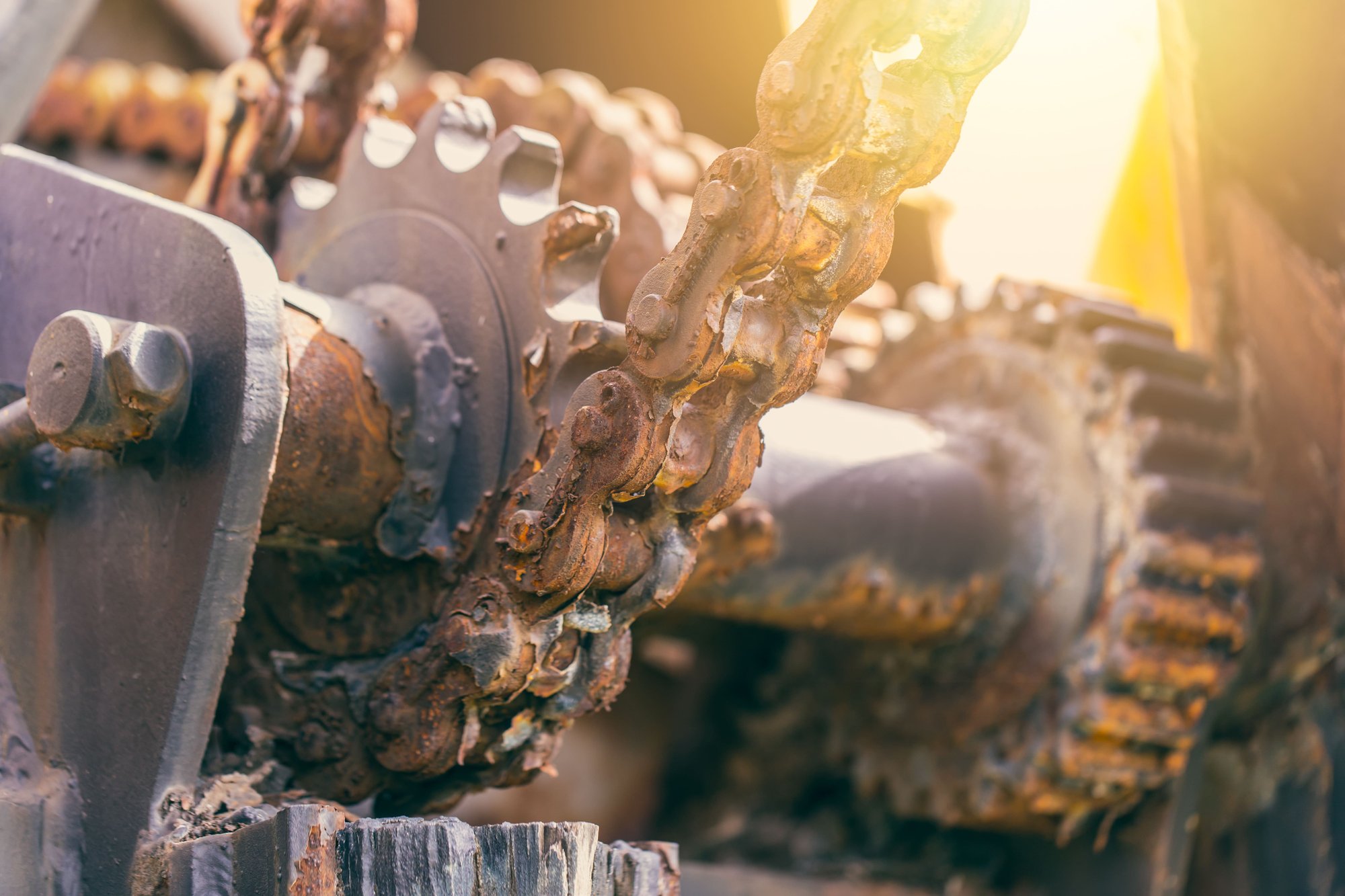
# The Effects of Corrosion on Industrial Efficiency
Dec 21, 2025 5:05:34 PM | Written by [AMPCO METAL](https://academy.ampcometal.com/author/ampco-metal)
- [Tweet](https://twitter.com/share)
**The effects of corrosion go far beyond visible surface damage. In industrial settings, corrosion weakens metal structures, disrupts performance, and leads to costly maintenance or downtime. Understanding how it develops is the first step toward maintaining long-term efficiency.**
### Corrosion as a Hidden Cost in Industry
Corrosion often develops slowly and quietly, making it one of the most underestimated expenses in industry. What begins as minor surface discoloration can eventually lead to leaks, part failures, or production delays. These gradual losses add up, affecting both productivity and profitability.
The true cost of corrosion lies in its reach. It impacts on equipment reliability, maintenance schedules, and energy consumption. By understanding the effects of corrosion, companies can better anticipate where problems start and act before efficiency and output are compromised.
### How Corrosion Impacts Equipment Performance and Reliability
Corrosion affects metals at both the surface and structural level. As oxidation or chemical reactions progress, metal bonds weaken, leading to reduced hardness, tensile strength, and fatigue resistance. Components that rely on tight tolerances, such as valves, molds, or bearings, are especially vulnerable because even slight dimensional changes can disrupt performance.
In heat exchangers or tooling, corrosion can also alter thermal or electrical conductivity, reducing energy efficiency and process accuracy. Rough or pitted surfaces increase friction and wear, accelerating mechanical damage. Over time, these small inefficiencies combine to lower overall reliability, making corrosion not just a maintenance concern but a key factor in long-term operational stability.
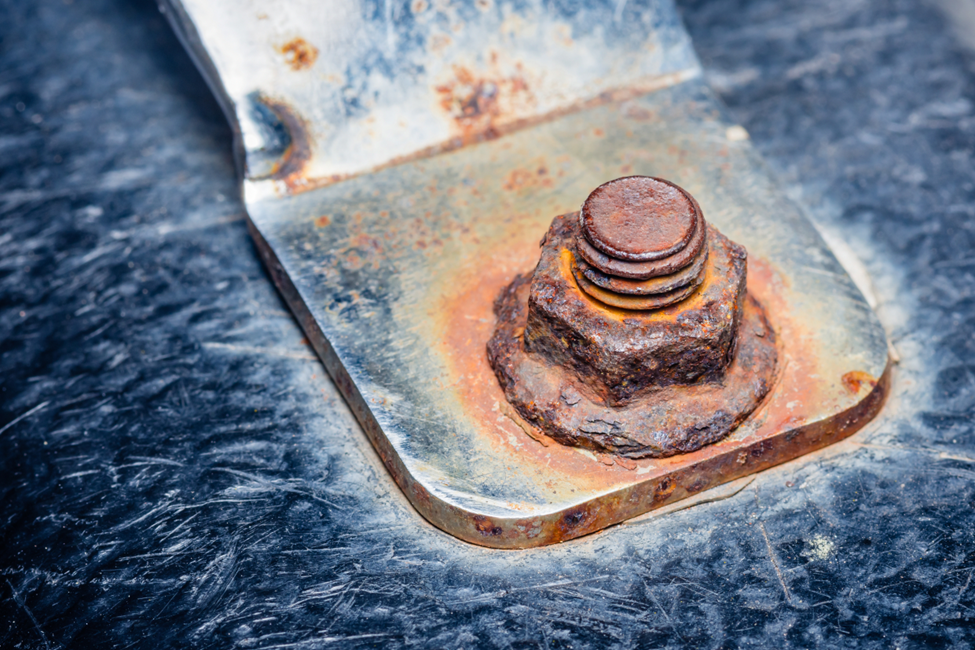*Corrosion can sometimes even disable the simple exchange of parts*
### Financial and Operational Consequences of Corrosion
The financial impact of corrosion extends far beyond repair costs. When equipment fails or requires frequent maintenance, production schedules slow down, labor hours increase, and replacement parts add to operational expenses. In industries where uptime is critical, even short interruptions can have measurable financial consequences.
Operational efficiency also declines as corrosion reduces performance over time. Components that no longer meet precision standards consume more energy, generate more waste, and require more frequent adjustments. These small inefficiencies accumulate, leading to higher operating costs and reduced profitability. Managing corrosion effectively is therefore not only a technical challenge, but a strategic one that directly affects productivity and return on investment.
### Strategies to Minimize the Effects of Corrosion and Improve Efficiency
Minimizing the effects of corrosion begins with prevention. A combination of good design practices, consistent maintenance, and the right material selection can significantly improve equipment longevity and efficiency.
**Key strategies include:**
- **Selecting [corrosion resistant materials](https://www.ampcometal.com/applications/corrosion-resistance/):** Copper and bronze alloys, such as those developed by AMPCO METAL, form stable oxide layers that protect surfaces from chemical attack and wear.
- **Applying protective coatings:** Paints, sealants, or surface treatments create barriers that slow down corrosion in aggressive environments.
- **Designing for drainage and airflow:** Eliminating tight gaps and stagnant areas prevents moisture buildup, one of the main causes of localized corrosion.
- **Scheduling regular inspections:** Early detection allows maintenance teams to repair or replace parts before corrosion spreads.
- **Controlling environmental factors:** Reducing humidity, salt exposure, or chemical concentration minimizes corrosion risks.
Incorporating these measures into daily operations not only prevents damage but also keeps equipment working at peak efficiency for longer periods. In practice, addressing corrosion early, through material selection and preventive planning, saves time, energy, and costs over the long term, while ensuring that equipment continues to perform at its intended level.

*A part of a crane that is completely destroyed due to erosive corrosion*
### Final Thoughts
Corrosion affects metals on a microscopic level, altering their structure and reducing both mechanical and chemical stability. Over time, these changes lead to performance losses that directly influence process efficiency and product quality. Managing corrosion effectively means understanding how different materials react under temperature, pressure, and chemical exposure, then choosing alloys designed to resist those conditions.
For those looking to deepen their technical understanding of corrosion mechanisms and material behavior, the [AMPCO Academy](https://academy.ampcometal.com/?hsLang=en) offers in-depth resources on alloy performance, testing methods, and preventive strategies used across demanding industrial applications.
---
[](https://cta-redirect.hubspot.com/cta/redirect/5331421/8da01823-dd9b-42be-91b8-c4efd4d4c1ea)
-
-
-
-
- [Terms of use](https://www.ampcometal.com/terms-of-use/)
- [Privacy](https://www.ampcometal.com/privacy/)
- [Links](https://www.ampcometal.com/links/)
- [Sitemap](https://www.ampcometal.com/sitemap/)
- [Code of ethics and conduct](https://www.ampcometal.com/documents/CODE-of-ETHICS-and-CONDUCT.pdf)
© 2026 AMPCO METAL