---
title: Industry Trends in Hydrogen Infrastructure
description: Hydrogen infrastructure is moving from project ambition to execution, raising new demands for pipelines, storage, refueling, and material qualification.
image: https://academy.ampcometal.com/hubfs/ChatGPT%20Image%20Jul%2023%2c%202026%2c%2004_22_25%20PM.png
---
[](https://academy.ampcometal.com/)
- Products
- AMPCO® Aluminium Bronze
- [AMPCO® 8](https://www.ampcometal.com/products/ampco-aluminum-bronze/ampco-8/)
- [AMPCO® 15](https://www.ampcometal.com/products/ampco-aluminum-bronze/ampco-15/)
- [AMPCO® 18](https://www.ampcometal.com/products/ampco-aluminum-bronze/ampco-18/)
- [AMPCO® 18.136](https://www.ampcometal.com/products/ampco-aluminum-bronze/ampco-18-136/)
- [AMPCO® 18.22](https://www.ampcometal.com/products/ampco-aluminum-bronze/ampco-18-22//)
- [AMPCO® 18.23](https://www.ampcometal.com/products/ampco-aluminum-bronze/ampco-18-23/)
- [AMPCO® 21](https://www.ampcometal.com/products/ampco-aluminum-bronze/ampco-21/)
- [AMPCO® 22](https://www.ampcometal.com/products/ampco-aluminum-bronze/ampco-22/)
- [AMPCO® 25](https://www.ampcometal.com/products/ampco-aluminum-bronze/ampco-25/)
- [AMPCO® 26](https://www.ampcometal.com/products/ampco-aluminum-bronze/ampco-26/)
- [AMPCO® 45](https://www.ampcometal.com/products/ampco-aluminum-bronze/ampco-45/)
- [AMPCO® M4](https://www.ampcometal.com/products/ampco-aluminum-bronze/ampco-m4/)
- AMPCOLOY® High Copper Alloy
- [AMPCOLOY® 83](https://www.ampcometal.com/products/ampcoloy-high-copper-alloy/ampcoloy-83/)
- [AMPCOLOY® 88](https://www.ampcometal.com/products/ampcoloy-high-copper-alloy/ampcoloy-88/)
- [AMPCOLOY® 89](https://www.ampcometal.com/products/ampcoloy-high-copper-alloy/ampcoloy-89/)
- [AMPCOLOY® 91](https://www.ampcometal.com/products/ampcoloy-high-copper-alloy/ampcoloy-91/)
- [AMPCOLOY® 95](https://www.ampcometal.com/products/ampcoloy-high-copper-alloy/ampcoloy-95/)
- [AMPCOLOY® 940](https://www.ampcometal.com/products/ampcoloy-high-copper-alloy/ampcoloy-940/)
- [AMPCOLOY® 944](https://www.ampcometal.com/products/ampcoloy-high-copper-alloy/ampcoloy-944/)
- [AMPCOLOY® 972](https://www.ampcometal.com/products/ampcoloy-high-copper-alloy/ampcoloy-972/)
- [Cu-W Sintered](https://www.ampcometal.com/products/ampcoloy-high-copper-alloy/cu-w-sintered)
- AMS Alloys
- [AMS 4590](https://www.ampcometal.com/products/ams-alloys/ams-4590/)
- [AMS 4640](https://www.ampcometal.com/products/ams-alloys/ams-4640/)
- [AMS 4880](https://www.ampcometal.com/products/ams-alloys/ams-4880/)
- [AMS 4881](https://www.ampcometal.com/products/ams-alloys/ams-4881/)
- [Standard Alloys](https://www.ampcometal.com/products/standard-alloys/)
- [Welding Wire](https://www.ampcowelding.com/)
- [Safety Tools](https://www.safetytools.com/)
- Solutions
- Applications
- [Wear Resistance](https://www.ampcometal.com/applications/wear-resistance/)
- [Corrosion Resistance](https://www.ampcometal.com/applications/corrosion-resistance/)
- [Metal Forming & Tooling](https://www.ampcometal.com/applications/metal-forming/)
- [Die Casting](https://www.ampcometal.com/applications/die-casting/)
- [Plastic Processing](https://www.ampcometal.com/applications/plastic-processing/)
- [Resistance Welding](https://www.ampcometal.com/applications/resistance-welding/)
- Industries
- [Aerospace](https://www.ampcometal.com/industries/aerospace/)
- [Automotive](https://www.ampcometal.com/industries/automotive/)
- [General Engineering](https://www.ampcometal.com/industries/general-engineering/)
- [Marine](https://www.ampcometal.com/industries/marine/)
- [Metal Forming](https://www.ampcometal.com/industries/metal-forming/)
- [Oil, Gas & Chemical](https://www.ampcometal.com/industries/oil-gas-chemical/)
- [Plastic Processing](https://www.ampcometal.com/industries/plastic-processing/)
- [Resistance Welding](https://www.ampcometal.com/industries/resistance-welding/)
- [Steel](https://www.ampcometal.com/industries/steel)
- [Hydrogen](https://www.ampcometal.com/industries/hydrogen)
- [Luxury](https://www.ampcometal.com/industries/luxury)
- [Finished Machine Parts](https://www.ampcometal.com/finished-machined-parts/)
- [Additive Manufacturing](https://www.ampcometal.com/additive-manufacturing/)
- [Technical Consulting](https://www.ampcometal.com/technical-consulting/)
- Who We Are
- [Sustainability](https://www.ampcometal.com/sustainability/)
- [Sustainability Management](https://www.ampcometal.com/sustainability/sustainability-management/)
- [Environment](https://www.ampcometal.com/sustainability/environment/)
- [Social](https://www.ampcometal.com/sustainability/social/)
- [Governance](https://www.ampcometal.com/sustainability/governance/)
- [Future Goals](https://www.ampcometal.com/sustainability/furure-goals/)
- [Our History](https://www.ampcometal.com/our-history/)
- [About Us](https://www.ampcometal.com/about-us/)
- [Working at AMPCO](https://www.ampcometal.com/working-at-ampco)
- [Working with AMPCO](https://www.ampcometal.com/working-with-ampco)
- Technical Hub
- Technical Data
- [Application Datasheets](https://www.ampcometal.com/application-datasheets/)
- [Technical Datasheets](https://www.ampcometal.com/technical-datasheets/)
- [Microcast® Technology](https://www.ampcometal.com/mirocast-technology/)
- [Machining Recommendations](https://www.ampcometal.com/machining-recommendations/)
- Documentation
- [Safety Data Sheets](https://www.ampcometal.com/safety-data-sheets/)
- [Certifications](https://www.ampcometal.com/certifications/)
- [Food Approval Data](https://www.ampcometal.com/food-approval-data/)
- [Sales Terms and Conditions](https://www.ampcometal.com/sales-terms-and-conditions/)
- [ATEX Certification Data](https://www.ampcometal.com/atex-certification-data/)
- [Product Selection Tool](https://www.ampcometal.com/product-selection-tool/)
- [Stock Availability](https://www.ampcometal.com/ssd/)
- [Academy](https://academy.ampcometal.com/)
- [Contact](https://www.ampcometal.com/contact-us/#contact-us)
# Industry Trends in Hydrogen Infrastructure
Jul 29, 2026, 12:35:13 PM | Written by [AMPCO METAL](https://academy.ampcometal.com/author/ampco-metal)
- [Tweet](https://twitter.com/share)
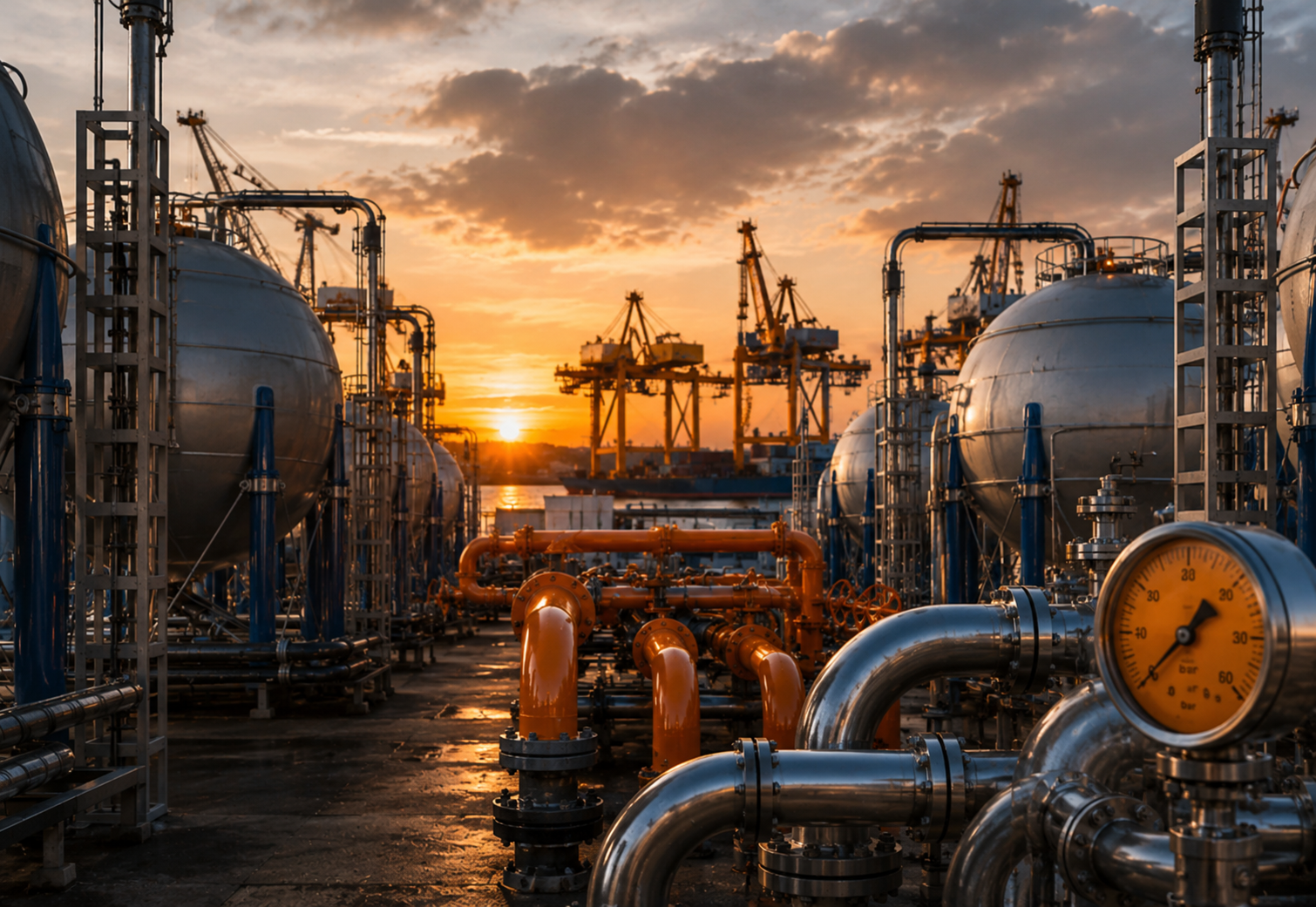
Hydrogen infrastructure is becoming one of the defining engineering questions in the hydrogen economy. Production capacity, electrolyzer costs, and low-carbon supply remain central to project planning. The next constraint is in the physical systems that move hydrogen from production assets to real users, including pipelines, storage sites, port terminals, refueling stations, compressors, valves, and pressure-bearing components.Hydrogen demand depends on whether these systems can be deployed at scale. A [2025 study on hydrogen demand](https://www.sciencedirect.com/science/article/pii/S2666519025000421) projected a wide range of possible outcomes, from 18.8 to 381.3 million tonnes per year by 2050, depending on technology development, policy support, and infrastructure investment. The same study identified transportation and industry as critical demand drivers, with the EU, the United States, and Asia-Pacific countries leading much of the regional activity.
For engineers, this makes infrastructure execution a material and component challenge. Low-emissions hydrogen assets must handle pressure, cycling, compression, storage, distribution, and long service life in hydrogen-bearing environments. Material choice, component qualification, and inspection planning now sit close to the practical development of hydrogen networks.
### Hydrogen Infrastructure: Beyond Project Announcements
Hydrogen projects are expanding across more end-use sectors. Refining, ammonia production, and chemical processing already use hydrogen at scale. New demand is expected from steel production, synthetic fuels, power balancing, heavy-duty transport, maritime applications, and industrial heat. This broader demand profile increases the need for infrastructure that can connect production sites, import routes, storage capacity, and industrial users.
The current project pipeline shows both the scale of ambition and the size of the execution gap. In its [2026 Global Hydrogen Review](https://www.iea.org/reports/global-hydrogen-review-2026), the IEA reports that announced hydrogen pipeline projects, including new and repurposed natural gas pipelines, exceed 40,000 km by 2035. Only 9% of that length is operational or has committed investment. For trade-linked low-emissions hydrogen, more than 40% of announced volumes by 2030 would depend on trade if all projects materialize, while less than 8% of that trade-linked volume is operational, under construction, or supported by committed investment.
This gap clarifies where the industry now stands. The bottleneck is bankable deployment. Projects need offtake agreements, permits, grid connections, storage access, financing, and material-qualified equipment before they become operational infrastructure. For engineering teams, that moves attention toward the qualification of pipelines, valves, compressors, fittings, storage interfaces, and other hydrogen-bearing systems.
### Pipeline Networks Now the Backbone of Hydrogen Transport
Large-scale hydrogen transport depends heavily on pipelines. Trucks and trailers can support early distribution, local supply, and smaller volumes, but industrial-scale hydrogen requires a more efficient transport backbone. This is why Europe, Germany, China, and other regions are investing in hydrogen pipeline infrastructure.
A major trend is the repurposing of existing natural gas pipelines. This approach can reduce cost, shorten development timelines, and use established energy corridors. It also creates technical questions because hydrogen behaves differently from methane. Existing pipelines, valves, compressors, seals, fittings, and auxiliary components need assessment before they can be used in hydrogen service.
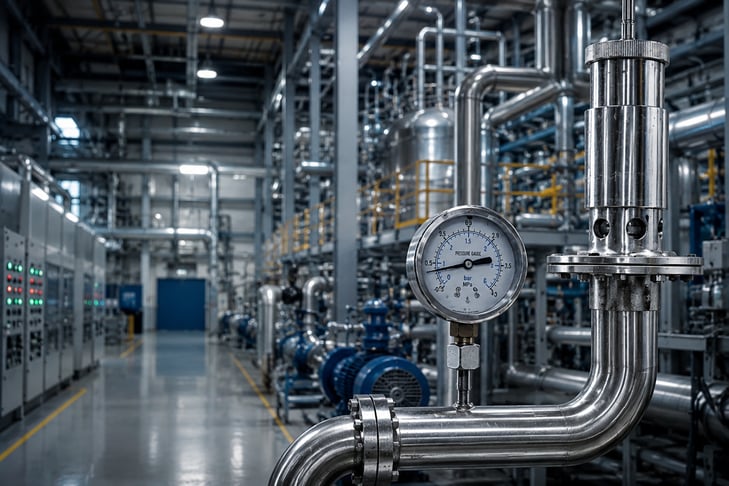
[Germany’s hydrogen core network](https://www.bundesnetzagentur.de/EN/Areas/Energy/HydrogenCoreNetwork/start.html) is one of the clearest examples of this trend. The approved network is planned to cover more than 9,000 kilometers by 2032, with around 60% based on converted natural gas pipelines and 40% newly built. The network is intended to connect production, import, storage, and consumption locations, including industrial clusters across the country.
[The European Hydrogen Backbone](https://ehb.eu/newsitem/european-hydrogen-backbone-grows-to-meet-repowereu-s-2030-hydrogen-targets) follows the same logic at continental scale. Its long-term vision includes a pan-European network of around 53,000 km by 2040, connecting supply regions, ports, storage sites, and demand centers. The concept is based on roughly 60% repurposed natural gas pipelines and 40% new pipeline stretches, including subsea sections. This approach aims to connect industrial clusters, port infrastructure, hydrogen valleys, storage facilities, and import corridors across Europe.
Pipeline repurposing is, therefore, a qualification exercise. Existing and new pipeline systems must be assessed not only for hydrogen transport capacity, but also for material compatibility, pressure cycling, sealing performance, compression requirements, and long-term integrity in hydrogen service.
### Storage Becoming a Flexibility Layer
Hydrogen storage is another critical infrastructure trend. Renewable hydrogen production depends on variable electricity generation, while industrial consumers need stable supply. Storage can help balance this mismatch and provide resilience across the network.
Underground storage, especially salt cavern storage, is becoming a key focus for large-scale hydrogen systems. The IEA reports that announced underground hydrogen storage projects could provide 11 TWh of capacity by 2035, equal to about 335 kilotonnes of hydrogen. Just over 7% of that capacity has reached final investment decision or is under construction. Large-scale salt cavern projects are already under construction in the United States, Germany, and China.
[Hydrogen Europe’s infrastructure report](https://hydrogeneurope.eu/wp-content/uploads/2024/10/2024.10_HE_.Hydrogen-Infrastructure-Report.pdf) gives this storage gap a sharper European context. Europe may need about 45 TWh of hydrogen storage by 2030 to support REPowerEU ambitions, while planned pure hydrogen storage capacity by 2030 is around 9 TWh. This leaves a gap of roughly 36 TWh by 2030. Underground hydrogen storage projects can require long development timelines, often between 5 and 11 years, depending on whether facilities are converted or newly built.
This makes storage one of the most time-sensitive parts of hydrogen infrastructure. Pipelines and production assets can be planned faster than large underground storage sites. If storage development falls behind, hydrogen networks may struggle to provide the stable supply that industrial consumers require.
Storage creates a different set of engineering conditions from steady transport. Injection and withdrawal cycles can expose equipment to pressure fluctuations, repeated loading, and changing thermal conditions. Compressors, valves, seals, wellhead equipment, and connecting pipeline systems must be designed for hydrogen exposure over long operating periods.
Storage assets are expected to operate safely across repeated cycles, often with limited access for direct inspection. Material selection and qualification need to account for hydrogen compatibility, fatigue behavior, corrosion exposure, sealing performance, and maintenance strategy.
### Ports as Hydrogen Trade Hubs
Not all hydrogen will be produced close to where it is consumed. Countries and regions with abundant renewable energy may become exporters, while industrial regions with high demand may depend on imported hydrogen or hydrogen carriers.
For example, Germany expects [hydrogen and hydrogen-derivative demand](https://www.bundeswirtschaftsministerium.de/Redaktion/EN/Hydrogen/Dossiers/national-hydrogen-strategy.html) to reach 95 to 130 TWh by 2030, with around 50 to 70% expected to come from imports. By 2045, hydrogen demand is projected at 360 to 500 TWh, with additional demand for hydrogen derivatives. This creates a direct infrastructure need for import terminals, pipeline connections, certification systems, storage capacity, and carrier-handling equipment.
Ports are becoming strategic hydrogen infrastructure because global trade will often rely on hydrogen carriers rather than pure hydrogen alone. Hydrogen can be transported as ammonia, methanol, synthetic fuels, liquefied hydrogen, or other carrier forms. The IEA reports that around 170 ammonia and 130 methanol port terminals are already in operation. Ammonia currently leads among announced hydrogen-carrier projects, while more methanol infrastructure is under construction, mainly linked to bunkering. Japan has also started construction on the first commercial-scale terminal for liquefied hydrogen imports.
The carrier choice has direct engineering and economic implications. Where pure hydrogen is required at the point of use, shipping can add minimum costs of around USD 2/kg H₂ and energy use above 10 kWh/kg H₂ because liquefaction or reconversion steps are energy intensive. This explains why ports are being designed not only as reception points, but as conversion, storage, bunkering, and distribution nodes.
Depending on the carrier, infrastructure may need to handle low temperatures, corrosive media, reconversion processes, high-pressure hydrogen, or chemically demanding environments. This trend will shape component requirements across marine terminals, storage tanks, pumps, valves, compressors, transfer systems, and safety equipment. The technical challenge becomes maintaining material integrity across several forms of hydrogen and hydrogen-derived products.
### Industrial Clusters Driving the First Wave of Demand
The most realistic early hydrogen infrastructure projects are concentrated around industrial clusters. This is where hydrogen demand already exists or can emerge with clearer offtake. Refineries, chemical plants, ammonia production, steelmaking, and other high-energy industries provide the strongest initial use cases because they need large volumes and have strong decarbonization pressure.
Industrial clusters reduce the uncertainty of early infrastructure development. Typically, production, storage, and consumption would be connected over shorter distances. Pipeline routes can be planned around known demand, shared infrastructure can serve multiple users, and ports can support imports where local production is insufficient.
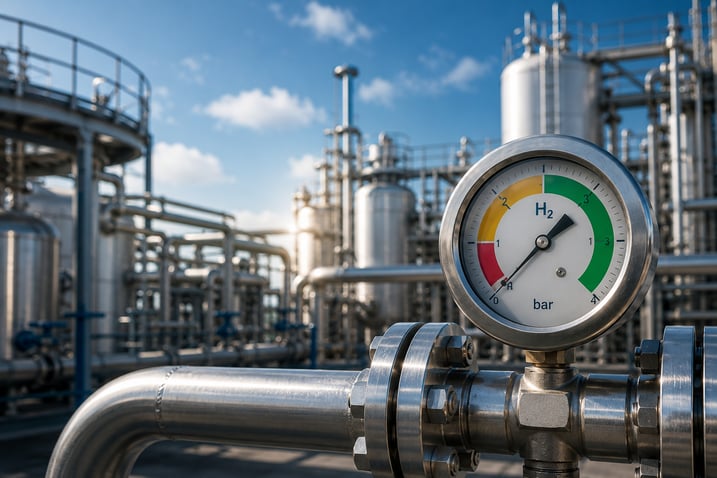
This cluster model is visible across Europe and other regions. Hydrogen valleys, industrial parks, and port-based hubs are becoming the practical starting points for infrastructure growth. Over time, these clusters may connect into wider regional or national networks.
For engineers, industrial clustering creates a practical design environment. Equipment is not designed for a vague hydrogen economy but for specific service conditions in compressors, pumps, valves, storage interfaces, reactors, piping systems, and process equipment. These components may face hydrogen exposure together with pressure, temperature, wear, corrosion, and cyclic loading.
### Heavy-Duty Transport Corridors Shaping Refueling Infrastructure
Hydrogen refueling infrastructure is becoming more focused on heavy-duty use cases. Passenger hydrogen vehicles have seen slower adoption in several markets, while heavy-duty transport still presents applications where fast refueling, long range, and high payload requirements can support hydrogen use.
[Europe’s Alternative Fuels Infrastructure Regulation](https://eur-lex.europa.eu/legal-content/EN/TXT/?uri=CELEX%3A32023R1804) requires publicly accessible hydrogen refueling stations along the TEN-T Core network by 2030, with a maximum distance of 200 km between stations. Each station on the network must be designed for a cumulative daily capacity of at least one tonne of hydrogen and include at least one 700 bar dispenser. The regulation also requires at least one hydrogen refueling station in every urban node by the end of 2030.
These requirements are aimed at supporting both cars and lorries, but the strongest infrastructure logic is likely to come from heavy-duty vehicles and freight corridors. Hydrogen may also play a role in buses, trains, port vehicles, maritime applications, and future aviation fuel pathways. These applications require high-utilization refueling systems, compression equipment, storage cylinders, dispensers, valves, and safety systems that can handle repeated pressure cycles. Infrastructure reliability becomes essential because refueling assets must operate under demanding duty cycles with limited tolerance for downtime.
### Infrastructure Growth Raises the Bar for Material Selection
Across these infrastructure trends, the common engineering challenge is exposure complexity. Hydrogen systems are moving toward higher utilization, longer asset lifetimes, pressure cycling, storage integration, import handling, and industrial process environments.
Each trend increases the need for materials that can perform under real hydrogen conditions. Strength, hardness, wear resistance, corrosion behavior, thermal conductivity, machinability, and hydrogen compatibility all matter. A component that performs well in conventional service still needs to be assessed for hydrogen exposure, final processing condition, geometry, loading mode, and inspection strategy.
This is especially important for components exposed to hydrogen under load or cycling. Valves, pumps, compressors, bushings, guides, seals, fittings, and related components may face combinations of hydrogen exposure, contact stress, friction, pressure variation, and heat, which can increase the risk of hydrogen-assisted degradation in susceptible materials. The final application determines the risk profile, and the material must be validated accordingly.
As hydrogen infrastructure moves from plans to physical assets, material qualification will become more important. Engineers will need options that can support demanding hydrogen-bearing environments without narrowing the design window unnecessarily.
AMPCO METAL supports engineers evaluating [copper-based alloy options](https://www.ampcometal.com/industries/hydrogen/) for selected hydrogen infrastructure applications. [Contact AMPCO METAL’s technical team](https://www.ampcometal.com/contact-us/) to discuss material requirements for hydrogen exposure, pressure, temperature, wear, corrosion, and component validation.
---
[](https://cta-redirect.hubspot.com/cta/redirect/5331421/8da01823-dd9b-42be-91b8-c4efd4d4c1ea)
-
-
-
-
- [Terms of use](https://www.ampcometal.com/terms-of-use/)
- [Privacy](https://www.ampcometal.com/privacy/)
- [Links](https://www.ampcometal.com/links/)
- [Sitemap](https://www.ampcometal.com/sitemap/)
- [Code of ethics and conduct](https://www.ampcometal.com/documents/CODE-of-ETHICS-and-CONDUCT.pdf)
© 2026 AMPCO METAL